IDM MAP4E1
IDM MAP4E1
The IDM MAP4E1-30 Hardware Voice Conference Device is an integrated service platform that combines 64K narrowband service access, PCM multiplexing, 64K timeslot cross-connection, and a 30-party voice conference room.
The IDM MAP4E1-30 Hardware Voice Conference Device is an integrated service platform that combines 64K narrowband service access, PCM multiplexing, 64K timeslot cross-connection, and a 30-party voice conference room.
The IDM MAP4E1-30 Hardware Voice Conference Device is primarily used for service access and cross-connection at the access layer of data communication networks. It features complete synchronization timing functionality, providing non-blocking cross-connection at the 64K level across 4 E1 channels, while also supporting up to 30 channels of 64K services, including 2-wire/4-wire audio, telephone, magneto telephone, common battery telephone, and V.24 data services.

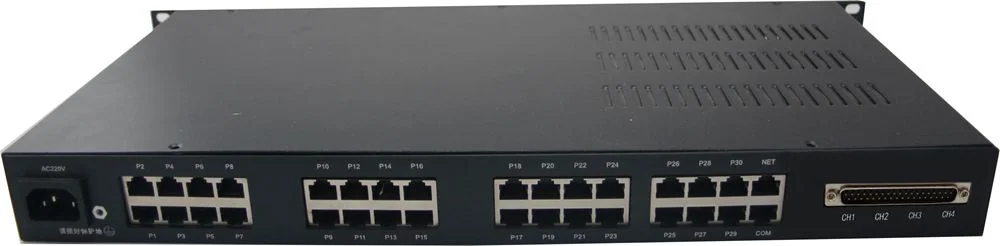
IDM MAP4E1-30 Hardware Voice Conference Device
The local end can support up to 30 audio terminals, and the types of audio terminals include:
(1) FXS interfaces for connecting telephones;
(2) FXO interfaces for connecting to switches;
(3) EMVOICE24 interfaces for connecting radios, trunked intercoms, access control intercoms, conference microphones, headsets, etc.;
(4) MicPhone interfaces for connecting microphones and speakers, used for monitoring and dedicated line intercom;
(5) NKT five-party intercom interfaces for transmitting Otis brand elevator five-party intercom systems over the network;
(6) VoiceSL five-party intercom modules for connecting Mitsubishi/Deling and other brand elevator five-party intercom systems for transmission and dispatch over IoT networks;
(7) The conference room features an optional voice-triggered communication activation function, used to connect half-duplex communication devices (such as trunked radios, wireless radios, and network intercoms) into full-duplex communication networks such as telephone networks.
The conference room can accommodate not only local terminals but also audio interfaces transmitted from remote locations via E1 interfaces. Conference rooms of multiple devices can be directly stacked to form a larger conference room.
The device features gateway configuration functionality, allowing any audio interface to be added to or removed from the conference room as needed!
By default, all parties in the conference room are allowed to speak, but a mute mode can also be configured for specific parties.
The hardware-based voice conference terminal features zero latency, clear and stable audio, and easy control, offering lower cost and better performance compared to server-based IP voice conference rooms. The PCM-based voice conference terminal supports a wide variety of terminal types and a large conference coverage area.
FAQs
What is the working principle of Pulse Code Modulation (PCM)?
Working Principle Pulse Code Modulation is the process of converting a time-continuous…
View answerPCM30 Working Principle: What Is PCM30/32
PCM30 Equipment Working Principle The 30-channel PCM equipment refers to equipment that provides 30 user interfaces and…
View answerWhat are the common problems of PCM equipment in enterprise applications?
At present, PCM equipment has become basically ubiquitous in enterprise network applications.
View answerWhat is E1? How to Use E1
What is E1 The European 30-channel pulse code modulation PCM is abbreviated as E1, with a rate of 2.048Mbit/s.
View answerFrame Structure of 30/32-Channel PCM Primary Group
A communication system consists of transmitting equipment, receiving equipment, and transmission equipment.
View answer