
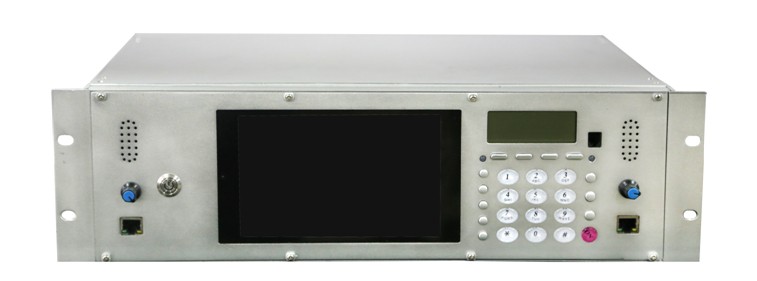
IDM M9000C
IDM M9000C
The IDM M9000C vehicle-mounted communication command and dispatch console utilizes advanced digital signal processing technology and large-scale integrated circuit technology to connect wireless communication terminals of different frequencies, standards, and types on a single voice platform, enabling interoperability among disparate wireless communication systems. It can also connect to the fixed telephone network, cellular mobile communication network, Internet (IP) network, wireless local area network, as well as trunked mobile communication systems, satellite communication systems, etc.
I. Overview
The IDM M9000C vehicle-mounted communication command & dispatch switch employs advanced digital signal processing technology and large-scale integrated circuit technology, enabling wireless communication terminals of different frequencies, standards, and types to be connected to the same voice platform, achieving interoperability among heterogeneous wireless communication systems. It can also connect to the public switched telephone network, cellular mobile communication networks, IP networks, wireless LANs, trunked mobile communication systems, and satellite communication systems.
The IDM M9000C vehicle-mounted communication command & dispatch switch is a voice dispatch system suitable for group command, featuring dedicated command, group command, skip-level command, and conference command functions. It can also be extended to support digital signaling standards of various telephone exchanges, with multiple narrowband and broadband voice/data interface capabilities.
The IDM M9000C vehicle-mounted communication command & dispatch switch can be used for air defense troop position command in combat, training exercises, counter-terrorism and stability maintenance, as well as emergency rescue and disaster relief. It provides an emergency interoperability platform supporting vehicle-mounted, fixed, portable, and mobile communication modes during natural disasters or emergencies. It also rapidly provides a collaborative voice platform for emergency interoperability communication systems covering public and private, wired and wireless, cross-regional, and cross-departmental networks.
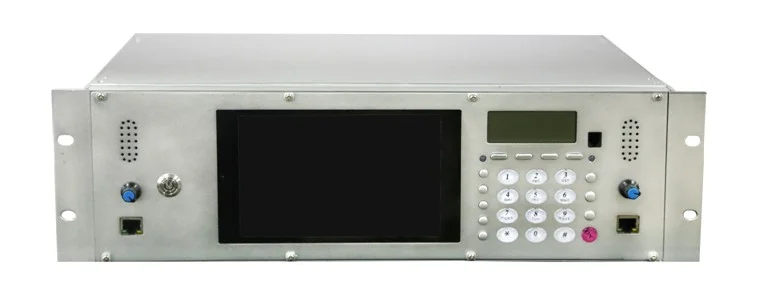
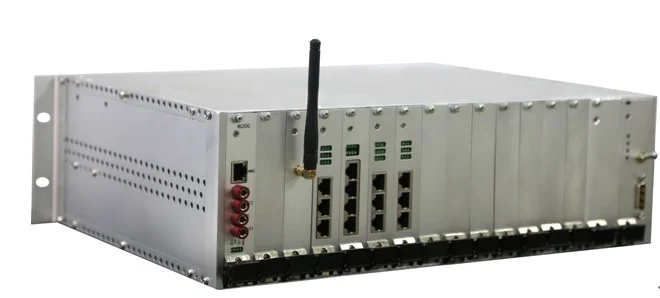
IDM M9000C Front IDM M9000C Rear
II. Product Features
The IDM-M9000C supports up to 48 radio station devices, including HF (shortwave), VHF (ultra-shortwave) single-sideband radios, and 350M/800M trunked intercom systems.
The main control switching board supports 64-party conference calls (expandable to 128 parties in this model), up to 32 simultaneous conference calls, and 64 channels of concurrent DTMF detection. The main control board provides 2 E1 interfaces, configurable for China Signaling No.7 or PRI signaling, or as 60 subscriber interfaces.
The M9000C can be directly connected to dispatch telephones and other terminals, or used in conjunction with a dispatch console for flexible dispatch functions.
This device provides real-time recording of up to 30 voice channels simultaneously. E1 voice to be recorded can also be transmitted to a computer via Ethernet for recording.
The unit provides 12 subscriber board slots, each accommodating a VHF interface board, FXS subscriber telephone board, FXO central office telephone board, Hotline telephone board, MAG magneto telephone board, etc.
When a VHF radio interface board is inserted into a subscriber slot, each board supports 4 channels, connecting to radio transmitters, receivers, remote control consoles, etc.
When FXS, FXO, or MAG boards are inserted, each board supports 10 channels. This device can connect up to 120 ordinary telephones or wired intercom terminals externally, expandable to 180 channels via 2 E1 interfaces.
External lines can monitor VHF radio interfaces via FXO.
FXS subscriber interfaces can connect ordinary telephones, PTT intercom terminals, etc. They can also be extended to more remote operating sites via PCM transmission.
SIP server boards and IP gateway boards can be inserted.
The trunk interfaces of the device can be:
GSM/CDMA interfaces;
WAN ports supporting electrical (RJ45) or optical (FC) interfaces for IP telephony access;
Ordinary telephone trunk interfaces, ordinary magneto interfaces or 2100Hz magneto interfaces, satellite telephone interfaces;
China Signaling No.1, China Signaling No.7, PRI signaling, etc.
III. Technical Specifications
E1 Interface
Line Rate | 2.048Mbps | Line Code | HDB3 |
Standard Protocol | SupportsITU-T G.703 | Impedance | 75Ω/120Ω |
Frame Structure | PCM30/32 | Signaling | Channel-associated signaling, China No. 1 signaling, China No. 7 signaling, PRI signaling |
Ethernet (FE)
Interface Type | RJ-45 | Transmission Rate | N×64K (N≤32) |
Standard Protocol | Supports IEEE802.3 | Operating Mode | Full/Half Duplex/Auto-Negotiation |
FXO, FXS Interfaces
Audio Frequency Range | 300Hz~3400Hz | Compression Rate | A-law per ITU G.711 |
Impedance | Three-element compound impedance 200Ω+560Ω//0.1μF | Loop Current | 20mA/channel |
EM2/4-Wire Interface
Audio Frequency Range | 300Hz~3400Hz | Impedance | Balanced600Ω |
Companding | A-law per ITU G.711 | Return Loss | Not less than18dB |
Magneto Interface
Audio Frequency Range | 300Hz~3400Hz | Impedance | Balanced600Ω |
Companding | A-law per ITU G.711 | Return Loss | ≥18dB |
Power Supply and Power Consumption
Power Supply | AC220V/DC-48V | Power Consumption | ≤150W |
Environmental Conditions
Operating Temperature | -10oC ~+50oC | Relative Humidity | 0~95% (non-condensing) |
Product Dimensions
Length×Depth×Height | 482×309×132(mm) |
IV. Typical Applications
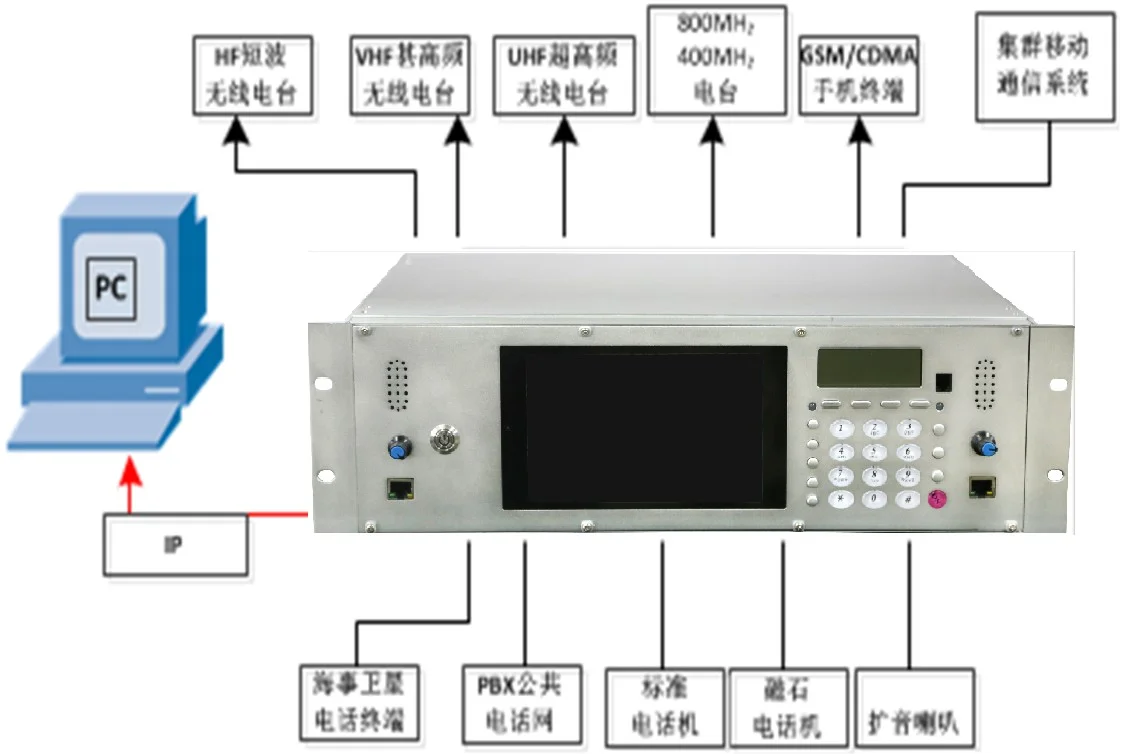
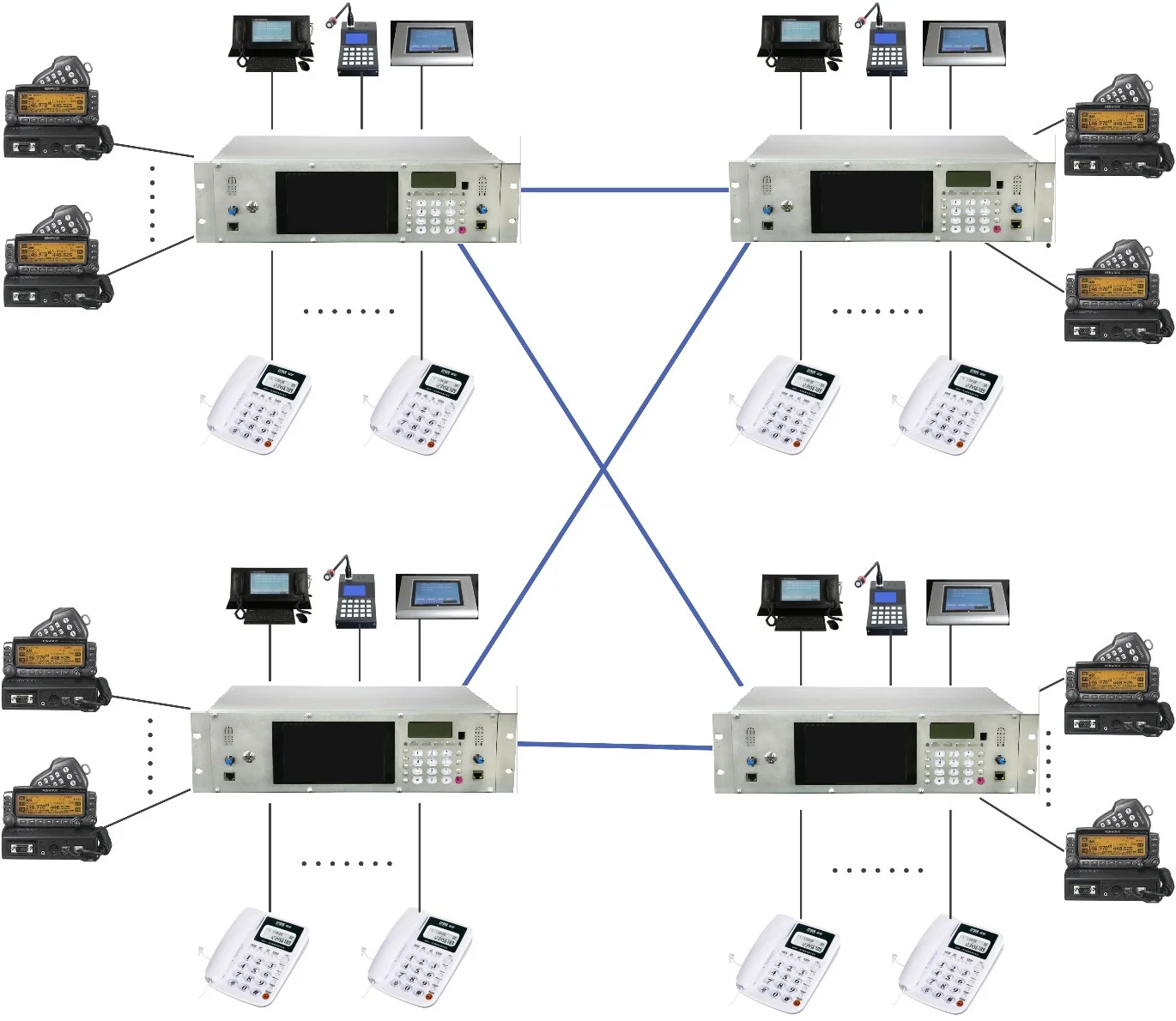
IDM M9000C Direct Connection Terminal Diagram Multi-Unit Networking Application
V. Operating Modes
5.1 Basic Operating Modes
Multi-party conference mode: Intercom with ordinary telephone sets adopts the multi-party conference mode, i.e., one conference number is configured for each VHF radio. All telephones monitoring that radio can dial in to enter the conference room. Within the conference room, the voice of any party (including both radios and telephones) will be transmitted to other telephones and can also be transmitted to the VHF radio. The continuous transmission time of the VHF radio is limited to 2 minutes. Due to the limited capacity of the conference room, the number of telephone terminals that can freely speak is limited. However, additional receive-only terminals can also be added at this time.
Ordinary telephone intercom mode: In this mode, there is no limit on the number of telephones joining a VHF intercom session. After dialing the VHF access number, a telephone can monitor the voice of that radio. When the user needs to speak to the radio, they must press the flash key on the telephone or tap the hook switch to obtain 20 seconds of speaking rights (20 seconds is the system default and can be configured). To prevent multiple users from contending, a prompt tone is played on the telephone that has obtained speaking rights.
PTT terminal intercom mode: In this mode, terminals are normally in the radio monitoring state. When the user needs to speak, they press the PTT key (ordinary telephones require a PTT adapter; our company provides telephones with PTT function switching). The speaking duration is determined by the terminal!
Broadcast mode: The VHF radio audio is broadcast one-way to each telephone that has joined the monitoring group. Terminals only receive VHF audio. This mode does not limit the number of telephones that can monitor each VHF radio channel.
Notes:
In actual use, mode 4 can be combined with the other three modes.
a) Multiple VHF radios can be operated in parallel by bridging 2 or more radios into the same conference room. Voice received by one radio can be forwarded to other radios or telephone terminals;
b) A single telephone can monitor multiple VHF radios, and its speech can be transmitted to multiple radios simultaneously.
5.2 Wireless Channel Access Control Modes
PTT control mode: Audio interfaces with PTT function shall prioritize PTT control mode when interfacing with radio transceivers and trunked radio systems.
DSP volume control mode: Some audio terminals do not have PTT function (e.g., conference microphones). In this case, the sound level is dynamically monitored, and the receive/transmit state of the wireless interface is controlled based on the sound level.
DTMF telephone keypad control mode: Telephones and mobile phones can send commands to the dispatch switch to control the receive/transmit state of the wireless interface via the DTMF keypad.
Note 1: Each wireless interface can select one control mode.
Note 2: Mobile phones or external fixed-line telephones can enter *02 to access a 2-channel radio. After pressing the # key, the user obtains 15 seconds of speaking rights (system configurable). To exit, enter [*#] or [*3302].
VI. IDM-MCC10 Portable Dispatch Console
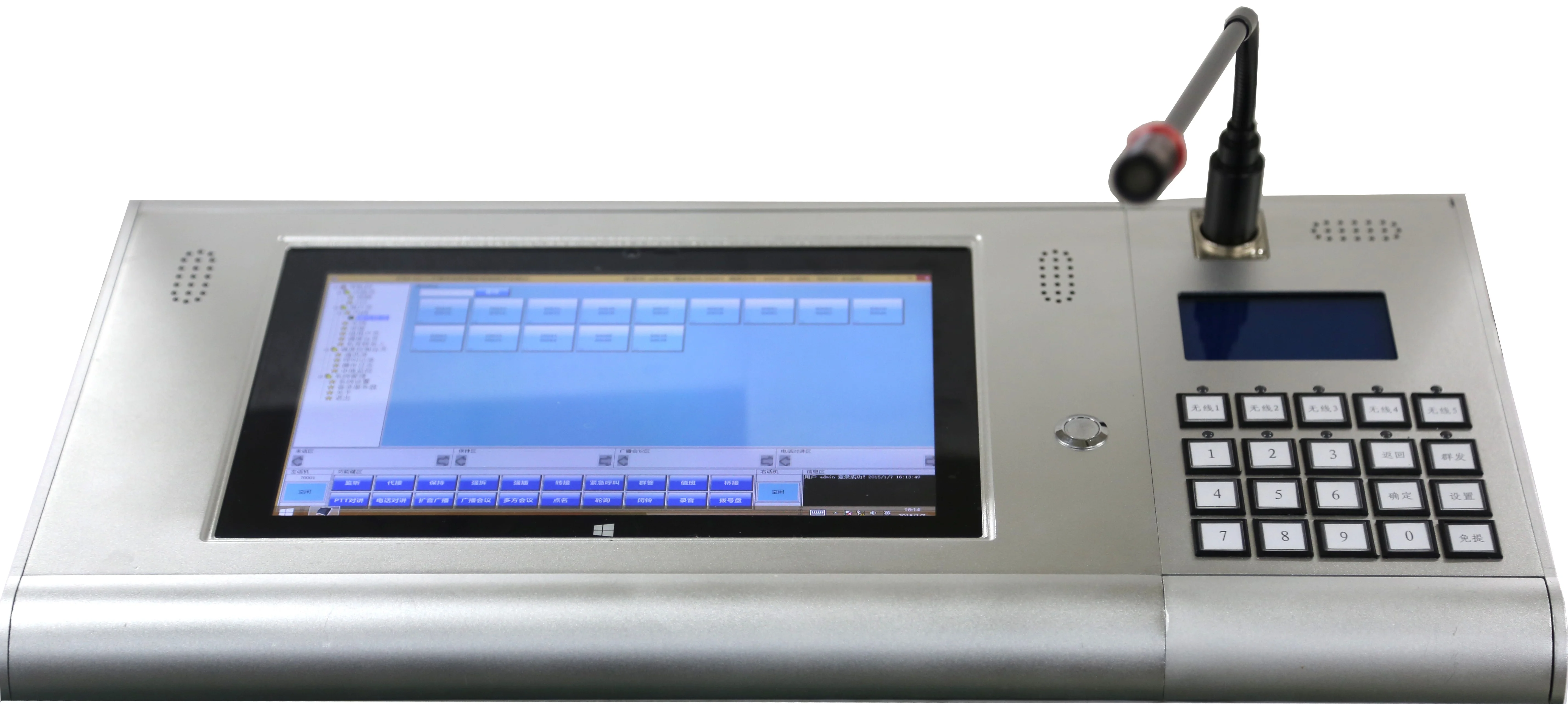
Basic Functions: Click-to-call, call transfer, call forwarding, call parking, call pickup, call barge-in, hold/resume, do-not-disturb, call blocking, night and holiday service policy configuration, etc.
Dispatch Functions: Barge-in, forced release, call pickup, monitoring, call barring, manual/automatic transfer, group call, group paging, conferencing, dynamic grouping, hierarchical collaborative dispatching, etc.
Broadcast Functions: Includes broadcast, public address, and ambient monitoring functions. Broadcast includes instant broadcast and scheduled broadcast. Broadcast audio sources can be selected from internal sound files, external audio sources, or TTS files for playback.
Trunked Radio Intercom: Can dispatch intercom radios of different frequency bands, different models, and different standards (digital/analog); transmission rights can be controlled through the dispatch software interface.
Conference Functions: Conference initiation, conference scheduling, conference member authentication, multiple simultaneous conferences, conference process monitoring, etc.
SMS Functions: Click to send SMS messages to internal IP phones, Wi-Fi phones, multimedia terminals, and GPS terminals, as well as to external mobile network phones.
Electronic Fax: Import fax files, batch sending, and after receiving faxes, save the images and automatically send them to designated email addresses.
Emergency Response Plans: Supports communication emergency response plan management. Emergency communication plans can be pre-edited according to the usage environment (e.g., flood control, drought relief, explosion, fire, etc.). When an event occurs, the corresponding emergency plan button can be clicked on the dispatch console to quickly initiate the pre-configured communication dispatch operations (e.g., automatic public address broadcast alarm, automatic initiation of a conference with the responsible personnel, automatic sending of event notification SMS).
Monitoring Functions: Missed calls, unregistered devices, and call queue status are all displayed; communication fault alarms and fault log management are provided.
System Management: Group management, account management, multi-level permission management, and hotline management.
FAQs
What Are the Functions and Advantages of Video Optical Terminals?
The function of a video optical terminal is to convert one or multiple channels of analog video signals into optical…
View answerWhat is the difference between a Video Optical Terminal and a Network Video Server?
Composition and Function of Video Optical Terminal and Network Video Server An optical terminal is a device used to…
View answerWhat are common issues when using optical terminals in security surveillance?
Fiber optic technology is increasingly used in security surveillance projects to transmit images, audio, data…
View answerWhat is IPTV and Its Key Technologies
IPTV, or Interactive Network Television, is an innovative technology that utilizes broadband cable TV networks…
View answer