
Firefighting Audio/Video Dispatch Command System
1 Requirements Analysis: Leveraging existing resources and utilizing advanced technologies such as electronic technology…
1 Requirements Analysis
Leveraging existing resources and utilizing advanced technologies such as electronic technology, IP communication technology, wireless technology, and navigation positioning, combined with the characteristics of the firefighting industry, build an intelligent firefighting collaborative emergency command solution integrating voice, data, and video.
This solution is centered on an audio/video integrated dispatch command platform, supplemented by GIS, video image acquisition, and integrated audio/video access, integrating functions such as alarm receiving, alarm handling, decision support, resource management, command, and dispatch. It achieves diversified alarm methods, networked command systems, accurate rescue locations, rapid instruction delivery, scientific command dispatch, linked auxiliary functions, real-time dynamic information, and informatized firefighting command, effectively responding to various fire incidents, minimizing disaster losses, and ensuring the safety of people's lives and property.
2 Solution Features
- Real-time rapid positioning: When a fire occurs, through auxiliary equipment such as GPS global satellite positioning systems and GIS geographic information systems, the accident location can be automatically and quickly identified, with real-time tracking of target positions and movements, assisting dispatch personnel in making dispatch decisions;
- Real-time on-site information feedback: After firefighters arrive at the accident site, on-site video information can be transmitted in real-time to the command center via image acquisition systems, using wireless terminals such as video individual soldier terminals, vehicle-mounted terminals, or 3G mobile phones, enabling command personnel to understand the on-site situation in real-time and providing intuitive and accurate decision-making basis.
- Real-time audio/video communication: This collaborative emergency command dispatch platform achieves converged communication of voice, data, and video. Dispatchers can initiate emergency audio/video conferences immediately through the graphical dispatch console, quickly handling emergencies in the shortest time, and can also perform operations such as one-key calling, group calling, individual calling, barge-in, and forced release for rapid dispatch command, achieving real-time communication between the command center and on-site rescue personnel, minimizing accident losses to the greatest extent.
- Centralized storage: Digital recording of all calls and storage of all image acquisition information ensure that the dispatch command process is documented and traceable.
- Historical record query: Automatically and accurately records alarm time, location, alarm handling procedures, and results, provides driving routes, replays driving trajectories and the entire process of alarm response and firefighting, ensuring traceability without false or missed alarms.
- Collaborative alarm: To prevent potential fire incidents, the firefighting collaborative dispatch command system interfaces with data monitoring and acquisition systems (such as smoke sensing devices and video surveillance systems). When abnormal information is sensed or monitored, the system automatically sends alarm information including the content and location of the abnormality to the command center or duty personnel. The firefighting center can promptly notify each fire brigade through monitoring equipment and quickly dispatch to resolve incidents and disasters.
3 Solution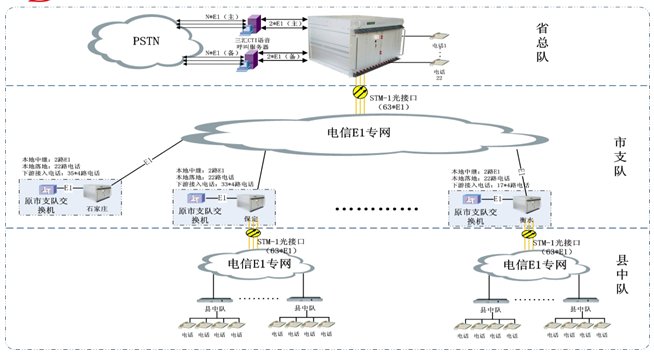

FAQs
What Is the Definition of Communication?
Communication: the exchange and transmission of information between people, or between people and nature…
View answerWhat is the difference between optical fiber and optical cable? What are the common optical fiber connectors?
Optical fiber is a medium that transmits information from one end to another. It is a glass or plastic fiber that…
View answerWhat is the difference between single-fiber and dual-fiber?
The biggest difference between single-fiber and dual-fiber optical terminals lies in the optical modules on their…
View answerWhat is E1? How to Use E1
What is E1 The European 30-channel pulse code modulation PCM is abbreviated as E1, with a rate of 2.048Mbit/s.
View answerPCM30 Working Principle: What Is PCM30/32
PCM30 Equipment Working Principle The 30-channel PCM equipment refers to equipment that provides 30 user interfaces and…
View answer