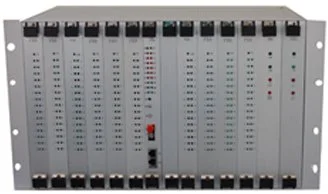
Difference Between PCM Equipment and Optical Terminal
Many friends may not yet understand the difference between PCM equipment and optical terminals. When users describe their requirements, they are often unsure whether to use PCM equipment or an optical terminal to meet them. In fact, there is a fundamental difference between the two. Strictly speaking, the transmission medium for PCM equipment is 2M coaxial cable, while the transmission medium for optical terminals is optical fiber.
From the perspective of product functions, there are also differences between the two. Although PCM equipment on the market comes in various models from different manufacturers, regardless of the brand, the function of PCM equipment is the same: to uniformly access narrowband user services and multiplex them into 2M signals for transmission. However, since the transmission distance of 2M coaxial cable is limited to a maximum of only 300 meters, and it suffers from high attenuation and poor lightning protection, PCM equipment is normally used only for narrowband service access and multiplexing, not for transmission. Therefore, some people classify it as access equipment. In general, the upstream of PCM equipment is equipped with a set of transmission equipment for long-distance transmission (the domestic transmission network primarily uses optical fiber as its transmission medium, so a large portion of the upstream transmission equipment for PCM equipment consists of optical terminals).