
Understanding Optical Terminals: What They Are and What They Do
Many people are unfamiliar with the professional device known as the optical terminal.
Many people are unfamiliar with the professional device known as the optical terminal. In essence, it is an optoelectronic signal transmission device widely used in communications, security, and various low-voltage engineering projects. Many are unclear about the definition, principles, and practical functions of optical terminals. Below, Raytrans provides an easy-to-understand explanation.
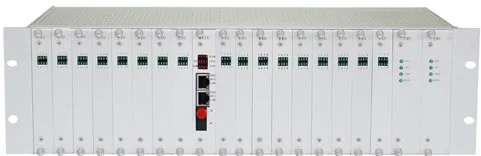
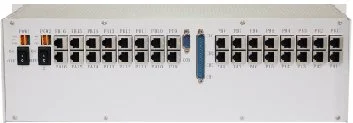
An optical terminal consists of an optical transmitter and an optical receiver working in tandem: the optical transmitter converts received electrical signals into optical signals that can be transmitted over optical fiber; the optical receiver works in reverse, converting the optical signals from the fiber back into electrical signals for normal use by downstream equipment.
Commonly used optical terminals on the market are mainly divided into three categories: telephone optical terminals, data optical terminals, and video optical terminals. All are professional information transmission devices widely applied across various industries.
Optical terminals first appeared in the form of data optical terminals. Early data transmission was mainly divided into two transmission series: plesiochronous and synchronous. Although plesiochronous transmission equipped each node with high-precision clocks and unified clock standards, minor clock errors still existed between nodes. With the rapid development of modern telecommunications services, plesiochronous transmission could no longer meet business demands, leading to the emergence of synchronous data transmission, which addressed these shortcomings and gradually replaced it.
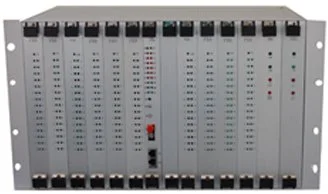
Even with significant improvements in synchronous transmission performance, it still fell short in scenarios involving uncompressed video signal access and long-distance transmission. As a result, telephone optical terminals and video optical terminals gradually became widespread, replacing and expanding the application scenarios of traditional data optical terminals. The most common examples are: communication systems using 30-channel telephone optical terminals to transmit voice signals, and security surveillance systems relying on video optical terminals for long-distance transmission of surveillance footage.
FAQs
What Is the Definition of Communication?
Communication: the exchange and transmission of information between people, or between people and nature…
View answerWhat are the characteristics and principles of fiber-optic transmission?
I. Background of Optical Communication In today's world, optical fiber communication has become the primary means of…
View answerWhat is the working principle and function of a media converter?
The rapid advancement of informatization has led to growing demand for multimedia communications such as data, voice…
View answerFrame Structure of 30/32-Channel PCM Primary Group
A communication system consists of transmitting equipment, receiving equipment, and transmission equipment.
View answerLow-Cost SDH Is an Inevitable Choice for Access Network Construction in the Near to Medium Term
The current status of metropolitan optical networks is that SDH/MSTP (DWDM) optical networks have become the mainstream…
View answer