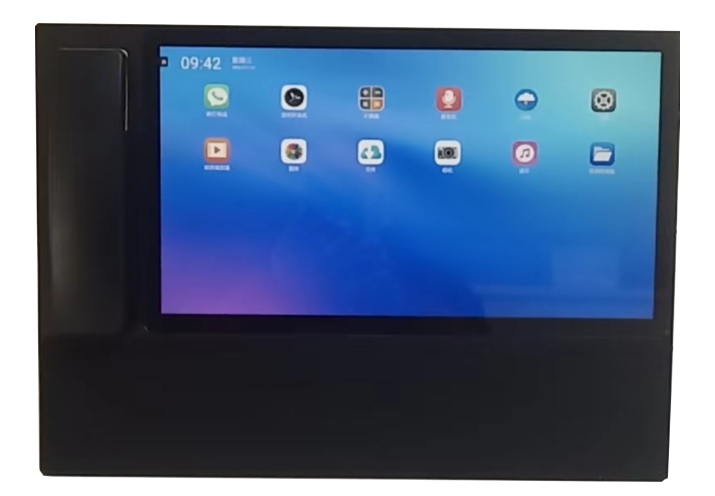
IDM Integrated Multiplexer
The IDM Integrated Multiplexer is a compact portable multimedia dispatch switch that integrates multiple communication methods including SDH communication, mobile phone communication, radio communication, subscriber telephone (FXS), and loop trunk (FXO). Through advanced digital voice processing technology and network encryption transmission technology, it enables seamless access of devices such as two-way radios of different frequency bands, VHF/UHF radios, HF radios, traditional PSTN telephones (Public Switched Telephone Network), IP softphones, and traditional IP phones into the dispatch system network.
Gallery
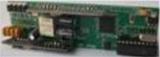

Overview
The IDM Integrated Multiplexer is a compact portable multimedia dispatch switch that integrates multiple communication methods including SDH communication, mobile phone communication, radio communication, subscriber telephone (FXS), and loop trunk (FXO). Through advanced digital voice processing technology and network encryption transmission technology, it enables seamless access of devices such as two-way radios of different frequency bands, VHF/UHF radios, HF radios, traditional PSTN telephones (Public Switched Telephone Network), IP softphones, and traditional IP phones into the dispatch system network. It can be used independently, paired with a dispatch console, or deployed as a remote trunking access gateway for a large dispatch system. It not only enables long-distance wireless two-way radio communication but also provides full-duplex voice interworking between wireless devices and wired terminals, effectively resolving challenges in wireless communication network interworking, dispatch, management, and large-scale networked dispatch. It is suitable for multi-communication integration in environments such as border posts, vehicles, and ships, and can be conveniently integrated into existing dispatch systems for long-distance large-scale wireless networked communication.
The IDM Integrated Multiplexer employs all-digital information processing technology with performance superior to relevant national standards. It supports both traditional PSTN telephone interfaces and IP telephony based on SIP standard protocol and H.323 protocol. It offers strong flexible configuration capability and is suitable for a wide range of application environments. It adopts a 19-inch 3U desktop structure design.
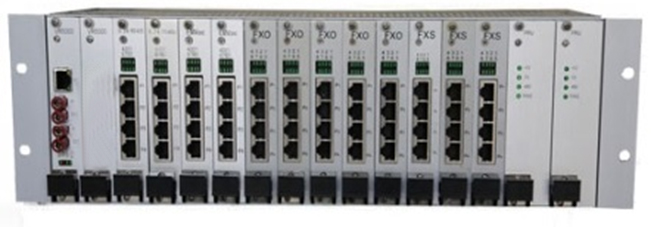
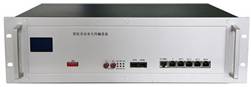
Device Front Panel Diagram
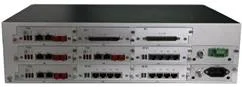
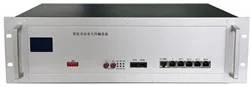
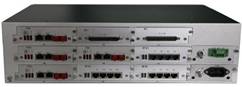
Device Rear Panel Diagram
Product Features
- Chassis structure adopts 19-inch standard 3U chassis with plug-in card design;
- Provides 9 user slots, accommodating 8FE Ethernet switching cards, 8E1 service cards, PDH service cards, high-definition video codec cards, and various 64K service cards, supporting access of voice and data services including WG300, PDH, E1, FXO/FXS, V.24/V.28/V.35, EM2/4, hotline telephone, magneto telephone, high-fidelity audio, X.50, and 10M/100M Ethernet;
- Supports multi-channel radio access via radio-to-EM24 audio conversion box (IDM-RADIO2EM24) in conjunction with EM24 cards configured in the host;
- Provides wireless radio interfaces and GSM/CDMA interfaces;
- Single chassis provides dispatch capacity of 240 channels;
- Provides 5-in-1 2-wire audio card: 3U-8MVOICE; each card provides 8 channels of 2-wire audio; each 2-wire audio channel can be configured as FXO/FXS/hotline/magneto/2100Hz magneto mode;
- Provides 4 groups of physically isolated EoS Ethernet, each group with configurable EoS bandwidth of N×VC12 (N=1~50); each group also provides 1 reserved extended Ethernet port; works with 8FE cards to expand the number of Ethernet interfaces;
- Integrates SDH transmission, PBX voice switching, multimedia command & dispatch, PCM service access, and video access technologies into the device;
- Supports 2 SFP interface STM-1 optical access, capable of forming ring, chain, star, and other topologies;
- Provides 252×252 VC-12 level non-blocking cross-connection between TDM interface services, supporting unidirectional, bidirectional, and broadcast services;
- Single card provides 64K level cross-connection capability of 512×512 64K non-blocking cross-connection, supporting unidirectional, bidirectional, and broadcast services;
- Supports Synchronous Equipment Timing Source (SETS), with optional tracking of optical line timing source or external synchronization input/output (2.048Mbit/s or 2.048MHz), and automatic timing source switching based on fault or SSM; clock source can be selected from line clock, external clock, or free-running oscillation;
- Standard model has a repeaterless transmission distance of 40 kilometers; custom configurations are available for distances exceeding this range;
- Provides Ethernet management channels based on DCC, E1, and N*64K; enables reliable management and monitoring of the IDM Integrated Multiplexer in standalone systems or across SDH ring networks; uses TCP/IP communication protocol;
- Provides F (10M/100M) network management interface, offering ITU-T recommended configuration, alarm, performance, maintenance, and security functions through the Netguard management system; also provides device network management cascade interface;
- Provides SNMP simple network management protocol;
- DC -48V and AC 220V power supply, with optional DC+DC, AC+AC, AC+DC dual backup power supplies;
Typical Device Configuration
The IDM Integrated Multiplexer can connect up to 12 wireless radio devices, including HF (shortwave), VHF (ultra-shortwave) single-sideband radios, 350M and 800M trunking two-way radios, etc.
The trunk interfaces of the device can be:
- GSM/CDMA interfaces;
- WAN port supporting electrical interface (RJ45) or optical interface (FC) (as access channel for IP phones);
- Ordinary telephone trunk interfaces;
- Ordinary magneto interfaces or 2100Hz magneto interfaces;
The default number of interfaces for connecting ordinary telephones or wired intercom terminals is 20 channels (10 channels per module).
Functional Description
- All wired intercom terminals can intercommunicate with each other;
- All wired intercom terminals and telephones can select any one or more wireless trunking groups for monitoring and speaking;
- Extensions can make external calls through ordinary telephone interfaces, GSM/CDMA, IP trunk, etc.;
- Any two or more wireless radios or trunking systems can be bridged.
- Supports group call function. When an external call comes in, all telephone extensions in the same group call group ring simultaneously. When any extension goes off-hook, the others stop ringing. If more than 2 external calls come in simultaneously, when any telephone goes off-hook, the external call with higher priority is connected first, while other extensions continue ringing;
- Simultaneous incoming external calls are always answered according to priority, and calls with equal priority are answered in order of ringing sequence.
- Generally, wired intercom terminals have higher priority than internal telephones. Users with higher priority can interrupt the trunking transmission rights of lower-priority users.
Application Example 1
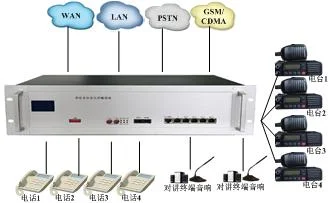
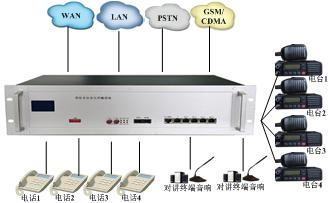
Figure 1 Single Mobile Portable Dispatch Switch Application
As shown in the figure above, a single IDM Integrated Multiplexer forms a dispatch system together with peripheral terminals and trunk lines;
Peripheral terminals include: wireless trunking, HF radios, intercom terminals, telephones, etc.;
Trunk lines include: PSTN network, GSM/CDMA mobile operator network, VoIP network, etc.;
Application Example 2
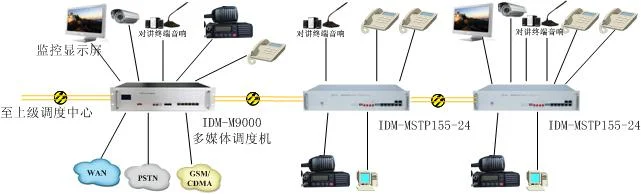
Figure 2 Mobile Portable Dispatch Switch with Optical-Electrical Integrated Unit Networking Application
As shown in the figure above, the IDM Integrated Multiplexer forms a dispatch system together with peripheral terminals and trunk lines; and extends dispatch services to remote ends through SDH optical port transmission in conjunction with optical-electrical integrated units; greatly expanding the application distance; and enabling video calls between different nodes;
Peripheral terminals include: wireless trunking, HF radios, intercom terminals, telephones, etc.;
Trunk lines include: PSTN network, GSM/CDMA mobile operator network, VoIP network, etc.;
Application Example 3
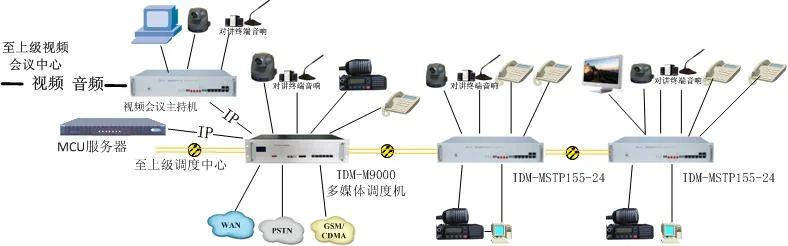
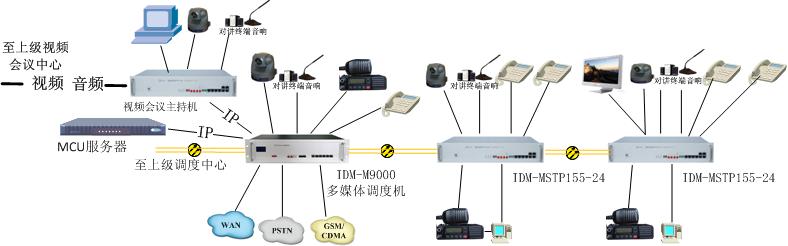
Figure 3 Mobile Portable Dispatch Switch with Optical-Electrical Integrated Unit Networking for Video Conference and Dispatch Applications
As shown in the figure above, the IDM Integrated Multiplexer forms a dispatch system together with peripheral terminals and trunk lines; and extends dispatch services to remote ends through SDH optical port transmission in conjunction with optical-electrical integrated units; greatly expanding the application distance; and enabling video calls between different nodes;
An MCU server and video conference terminal are configured at the dispatch center to establish a local video conference system; video and audio ports can also be connected to the higher-level video conference center;
Peripheral terminals include: wireless trunking, HF radios, intercom terminals, telephones, etc.;
Trunk lines include: PSTN network, GSM/CDMA mobile operator network, VoIP network, etc.;
Application Example 4
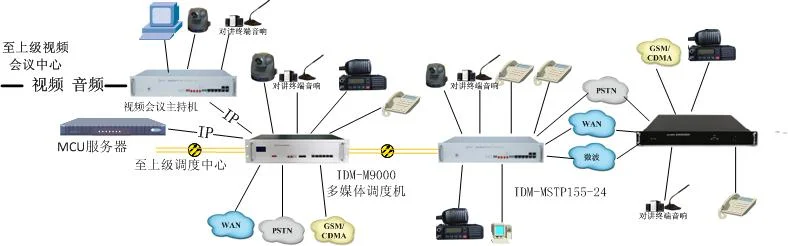
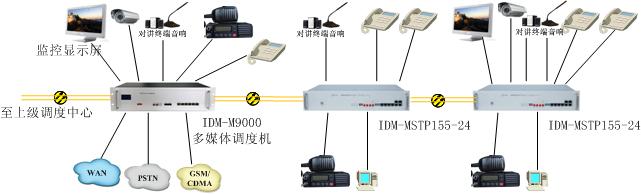
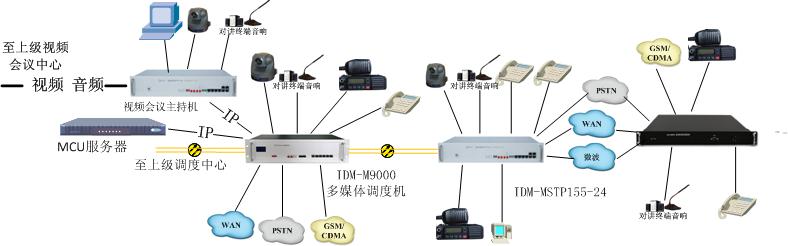
Figure 4 Mobile Portable Dispatch Switch Networking with IDM-M2000 for Video Conference Applications
As shown in the figure above, the IDM Integrated Multiplexer forms a dispatch system together with peripheral terminals and trunk lines; and extends dispatch services to remote ends through SDH optical port transmission in conjunction with optical-electrical integrated units; greatly expanding the application distance; and enabling video calls between different nodes;
In remote areas not covered by the IDM Integrated Multiplexer, the IDM-M2000 dispatch switch can be configured to further extend the dispatch management scope.
An MCU server and video conference terminal are configured at the dispatch center to establish a local video conference system; video and audio ports can also be connected to the higher-level video conference center;
Peripheral terminals include: wireless trunking, HF radios, intercom terminals, telephones, etc.;
Trunk lines include: PSTN network, GSM/CDMA mobile operator network, VoIP network, etc.;
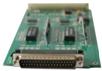
3U Card Selection List
Card List | 3U-10FXS Card | 3U-FXO Card | 3U-8E1 Service Card |
Physical View |
|
|
|


Function Description | Provides 10 FXS interfaces | Provides 10 FXO interfaces | Provides 8 E1 interfaces |
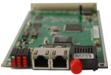
Card List | 3U-PDH Card | 3U-8V.24 Card | 3U-HDVcodec (HD Video Codec Card) |
Photo |
|
|
|


Function Description | 155M PDH optical interface and 2 shared Fast Ethernet interfaces | Provides 8 channels of RS232/RS485/RS422 | Provides four 1080P video inputs and 1 1080P output; the transmission bandwidth can use 1 EOS channel with a bandwidth of NxE1 |
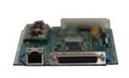
Card List | 3U-8ETH Card | 3U-WG300 (Signaling Access Card) | 3U-8USER (Universal PCM Service Slot) |
Physical View |
|
|
|


Functional Description | Provides 8 channels of 100M Ethernet switching services; the 9th 100M port connects to one of the 4 EOS channels in the SDH network | Provides 2 E1 digital signaling access channels from the local or remote end, supporting access for Signaling System No. 1, Signaling System No. 7, PRI signaling, and V5.2 signaling. Used in MUX series slots to provide telephone access to the local or remote end, or to function as a telephone exchange. | Four universal slots that can accommodate 4 dual-channel 64K service PCM cards. |
Card List | 3U-8MVOICE (Multi-function Conversion Service Card) | 3U-4EM2/4VOX | 3U-8SY64K (Co-directional 64K Interface) |
Physical View |
|
|
|


Function Description | 8-channel multi-mode 2-wire audio card, configurable via NMS as FXS, FXO, hotline, ordinary magneto, or 2100HZ magneto service card | Provides 4 channels of EM2/4-wire audio with NMS-controlled gain, Gain range: , adjustment step: 0.5dB | Provides 8 channels to 64K interface |
Universal Slot Card Selection List
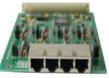
Card List | FXO | FXS | 2/4-Wire Audio Card |
Physical View |
|
|
|


Function Description | Mainly used to connect interfaces such as automatic private telephone exchanges and common-battery telephone exchanges. Available in two types: FXO card and FXS card. Each card supports 2 channels of service. | Mainly used to connect interfaces such as automatic private telephone exchanges and common-battery telephone exchanges. Available in two types: FXO card and FXS card. Each card supports 2 channels of service. | Provides pure audio access via 2-wire audio or 4-wire audio. Each card supports 2 channels. |
Card List | EM2/4 2/4-Wire Audio | Standard Magneto Card | V.24 Card |
Physical View |
|
|
|


Function Description | Provides 2-wire audio or 4-wire audio access, and supports EM signaling access. The EM interface operating voltage is 48V, and can also be customized. 1 channel per card. | Can connect to magneto telephone sets or magneto switches, etc. Typically, MAG cards at both ends are used in pairs. 2 channels per card. | Provides 2 channels of V.24 service access. 2 channels per card. |
Board List | 2100HZ Carrier Magneto Card | Hotline Telephone Card | Through 64K Card |
Physical View |
|
|
|


Functional Description | Typically used in pairs. Can also use 2/4-wire audio cards for trunk relay transmission, or connect to the magneto trunk port of a switch. | Provides point-to-point dedicated telephone access, with signaling tones such as remote ringback tone, on-hook tone, and howler tone. | Provides 2 channels of 64K services, 2 channels per card. |