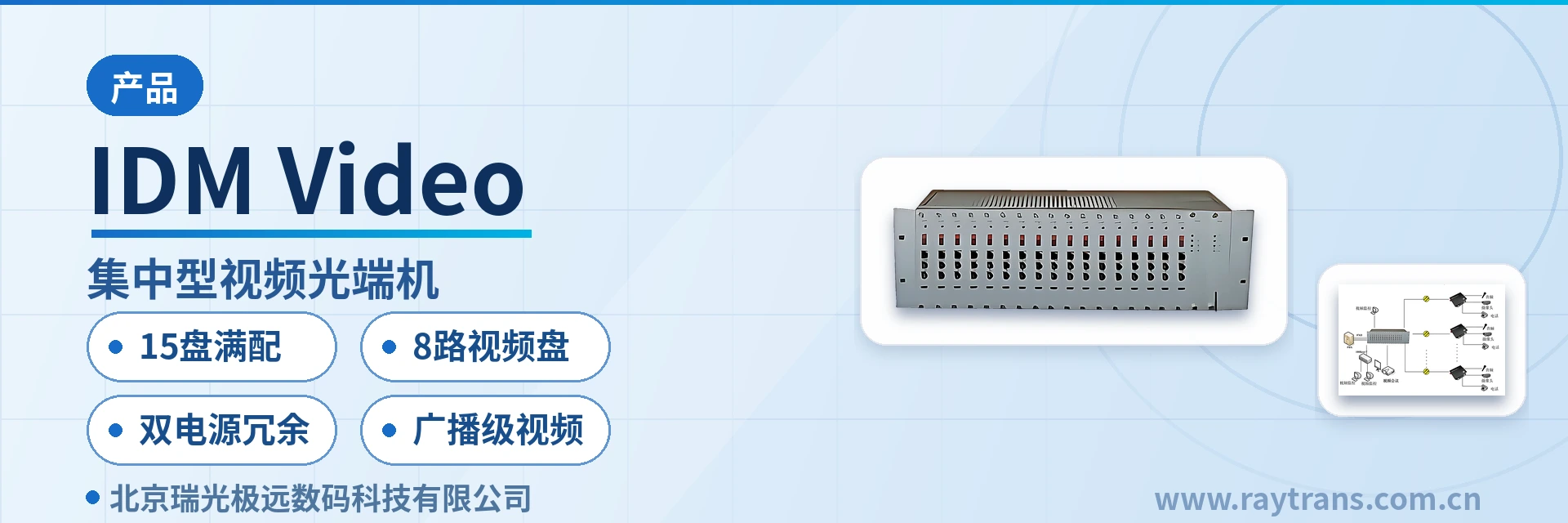
IDM-Video Centralized Video Optical Multiplexer
15-card full configuration
The IDM-Video centralized video optical multiplexer adopts advanced all-digital uncompressed video transmission technology for high-quality video transmission results. According to user requirements, the user cards of the device can be optionally configured as 1-channel video cards, 2-channel video cards, or 4-channel video cards
The IDM-Video 15-card fully configured centralized video optical multiplexer is a rack-mounted central-end video optical transmission device developed by Beijing Ruiguang Jiyuan Digital Technology Co., Ltd. (Raytrans). As a representative product of Raytrans, a professional optical multiplexer manufacturer, the device adopts all-digital uncompressed video transmission technology and consists of a 19-inch 5U standard chassis, service user cards, a network management card, and power cards. It is used to aggregate the video, audio, data, and Ethernet services sent from multiple remote stations to the central end and restore them for output, making it an important model in the product showcase for centralized video optical transmission scenarios. The 15-card fully configured centralized video optical multiplexer configures service capacity in a card-based manner. User cards can be selected according to on-site requirements as 1-channel video cards, 2-channel video cards, 4-channel video cards, or 8-channel video cards. In full configuration, there are 15 user cards, 1 network management card, and 2 power cards. As a multi-service optical multiplexer, the device is compatible with PAL, NTSC, and SECAM video formats. It is suitable for expressway and rail transit monitoring, unattended sites in electric power and energy, industrial video private networks in factories and industrial parks, and other scenarios, and can flexibly carry video and multi-service access requirements in government private network optical fiber communication solutions and traffic monitoring video transmission solutions. In the video optical multiplexer product showcase, this model has become a preferred solution for centralized deployment of optical multiplexers thanks to its high-density card-based structure and network management capabilities.
Key Specifications at a Glance: 19-inch 5U standard chassis · 15-card full configuration · 8-channel video card · dual power supply redundancy · broadcast-grade video · CD-grade audio · online network management monitoring
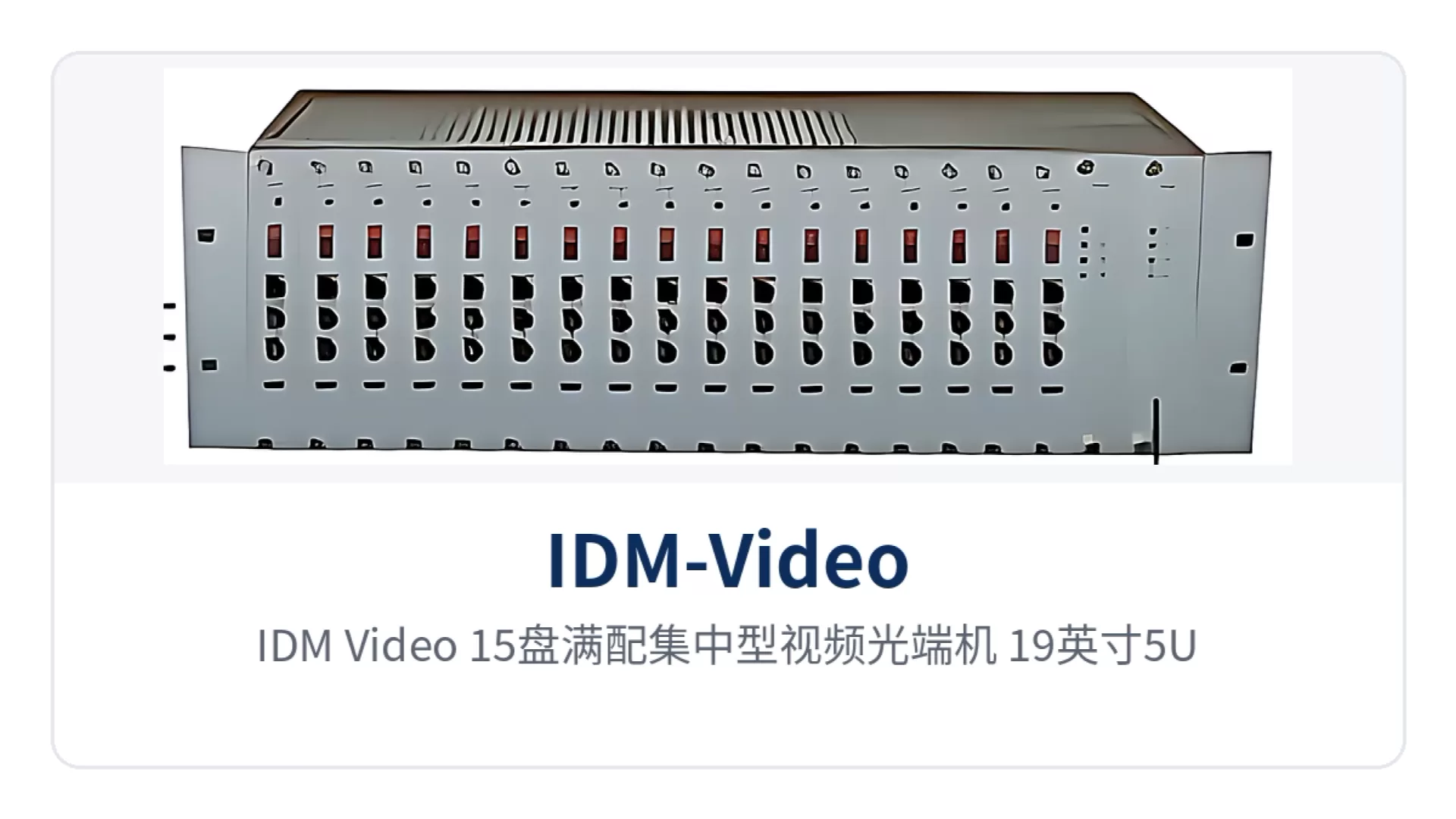
Figure 1: IDM-Video 15-card fully configured centralized video optical multiplexer 19-inch 5U chassis front view and card slots
What kind of equipment is the 15-card fully configured centralized video optical multiplexer? Definition and uncompressed transmission principle
The 15-card fully configured centralized video optical multiplexer is a card-based central-end video optical transmission device. Its positioning is not to replace the point-to-point optical multiplexer beside a camera, but to concentrate the video and supporting services scattered across multiple remote stations onto a single 5U chassis for access, multiplexing, and output. All-digital uncompressed video transmission technology is the core of the link: after the video signal enters the device, A/D sampling is completed, and a digital stream is formed and sent onto the optical path without going through compression encoding. At the receiving end, it is restored to video output through D/A conversion. There is no encoding and decoding stage in the middle of the link, so the picture does not suffer compression damage, nor does it introduce additional latency caused by encoding and decoding. As a representative model launched by an optical multiplexer manufacturer for centralized product showcase needs, the device plays a core role in multi-site video aggregation in security and private network projects.
The IDM-Video 15-card fully configured centralized video optical multiplexer is compatible with PAL, NTSC, SECAM, and other video formats. Video quality can reach broadcast-grade standards, and audio quality can reach CD-grade standards. The transmission section features automatic gain control (AGC), maintaining stable video signal amplitude over long-distance links. The transparent data encoding method makes the device compatible with the products of major camera manufacturers. SMT surface mount technology (SMT) and video lossless regenerative repeater capability jointly support long-distance video transmission.
The product documentation of the IDM-Video 15-card fully configured centralized video optical multiplexer does not list the optical interface type, optical power budget, or single-segment transmission distance. This page makes no inference. Actual projects shall be calculated according to the optical module and optical fiber link selected for the project, and specific values are subject to the manufacturer's technical documentation and commercial confirmation.
What services can a single 8-channel video card carry? User card selection and 15-card full configuration capacity
The basis for determining user card configuration is how many channels of video each remote station needs to send and whether data, bidirectional audio, and Ethernet services are also required in addition to video. Accordingly, the corresponding user card type is selected and inserted into the chassis. A single 8-channel video card in full configuration simultaneously carries 8 channels of unidirectional video, 4 channels of data, 4 channels of bidirectional audio, and 2 channels of Ethernet. The four types of services are multiplexed and transmitted over the same optical path. When a site has many service types, there is no need to lay separate optical cables or configure additional transmission equipment for each service type. This card-based design in the form of a multi-service optical multiplexer allows a single optical multiplexer to simultaneously access video, audio, data, and Ethernet services.
| User Card Type | Video Channel | Configuration Points |
|---|---|---|
| 1-channel video card | 1-channel unidirectional video | Single-camera sites with low service channel requirements |
| 2-channel video card | 2-channel unidirectional video | Dual-camera sites or single sites sending two channels of video |
| 4-channel video card | 4-channel unidirectional video | Aggregation points for 4 channels of video at intersections, corridors, equipment rooms, etc. |
| 8-channel video card | 8-channel unidirectional video | Upper limit of the service capacity of a single card: 8-channel unidirectional video + 4-channel data + 4-channel bidirectional audio + 2-channel Ethernet |
The capacity specification of the 15-card full configuration is 15 user cards + 1 network management card + 2 power cards. Service card slots can be added step by step according to sites for capacity expansion. How many devices are needed at the central end of a centralized video optical multiplexer depends on the number of remote stations and the service combination at each site: the central end uses one 19-inch 5U chassis to complete multi-site service access and aggregation, with no need to configure a separate central-side receiving device for each site. Cabinet space is planned at 5U, and the number of power supply circuits and cabling is reduced accordingly. The card-based structure facilitates separate replacement of a faulty card slot, and maintenance is located by card.
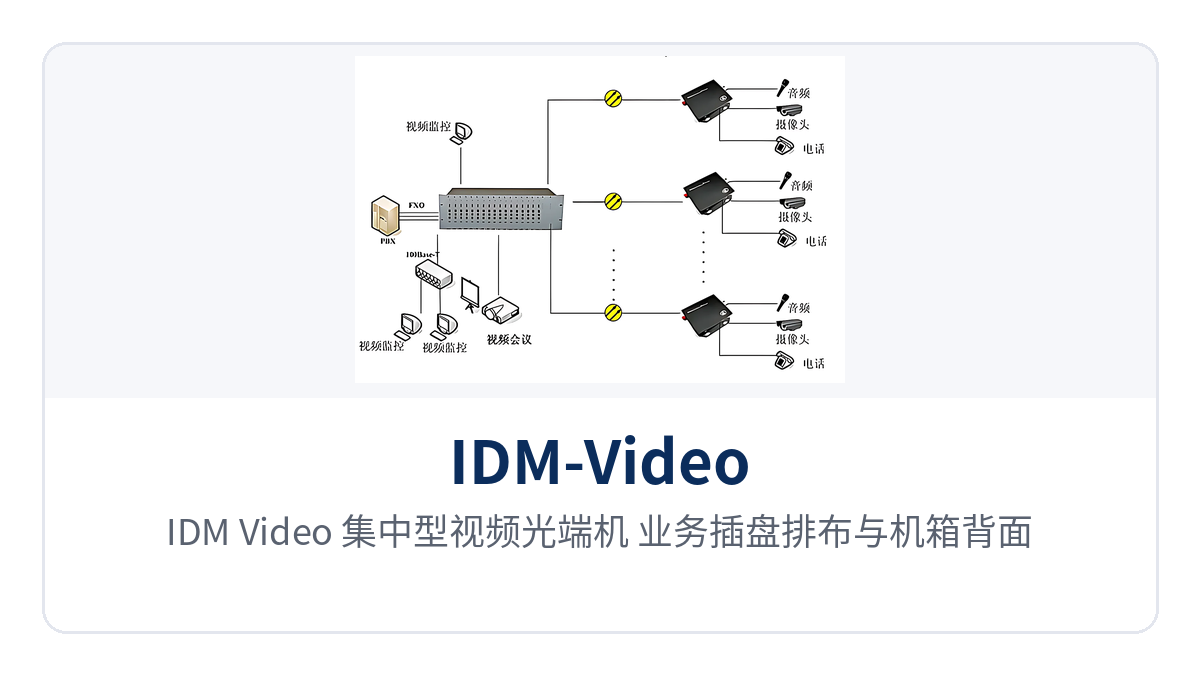
Figure 2: IDM-Video centralized video optical multiplexer service card layout and optical port positions on the rear of the chassis
How to design star networking: one 5U central end aggregates multiple remote stations
The key point in designing star networking is to place one 5U centralized chassis at the central end and one remote device at each remote station. Each site's link is independently aggregated to the central end, forming a star network from the central end to multiple sites. The engineering value of the star structure is that sites do not affect each other. When a link or device at one site becomes abnormal, the video services at other sites are not affected, and O&M personnel can locate the issue link by link.
After a network management card is configured at the central end, online network management monitoring is supported. The working status of devices on the link can be viewed online in real time, and alarm information is presented centrally, so duty personnel do not need to conduct on-site inspections site by site. The equipment selection at the remote station side is determined by the site service combination and link distance, and specific models are subject to the manufacturer's technical documentation and commercial confirmation. The optical interface type, optical module distance, and link budget also need to be calculated according to actual optical fiber conditions on site.
Star networking is suitable for projects where sites are relatively dispersed and the service volume at each site is not large, such as monitoring points along expressways, peripheral points of rail transit stations, outfield cameras in plants, and perimeter monitoring points in industrial parks. The card-based structure of the 15-card full configuration gathers multi-site services into one 5U chassis, making unified power supply and unified O&M easier than setting up receiving-end devices separately at each location. In traffic monitoring video transmission solutions, star networking can aggregate camera sites along the line to the central end. When used together with government private network optical fiber communication solutions, it can also achieve service interfacing with the private network platform.
How does central-end dual power supply redundancy protect unattended sites?
For how central-end dual power supply redundancy protects unattended sites, the engineering approach is to determine the input mode according to the actual power supply conditions of the equipment room, and then connect device alarms to the network management or power and environment monitoring system, so that power supply abnormalities can be discovered at the central end. The IDM-Video 15-card fully configured centralized video optical multiplexer is equipped with 2 power cards for mutual backup. When one becomes abnormal, the other continues to supply power to the chassis, so the power supply is not interrupted as a whole due to a single board failure. In the redundancy design of the power supply for this series of optical multiplexers, Raytrans treats mutual backup of dual power cards as the standard configuration for central-end devices.
The power supply and lightning conditions of industrial plant equipment rooms, highway outfield cabinets, and weak-current rooms at industrial park perimeters vary greatly, and the O&M cost of unattended sites is mainly concentrated on traveling to and from the site. The device also features a lightning protection self-recovering fuse circuit design. After a lightning strike or surge causes the fuse to operate, the circuit can self-recover, reducing the situation where a single induced lightning strike causes long-term transmission interruption and requires personnel to handle it on site. Together with online network management monitoring and complete alarm functions, the daily inspection cycle can be arranged according to the importance of the site. Specific power supply specifications and lightning protection levels are subject to the manufacturer's technical documentation and commercial confirmation.
Functions and Performance Specifications
Function List
| Function | Description |
|---|---|
| Central-end star networking | Adopts a 19-inch 5U standard chassis and can serve as the central end to form a star network with multiple remote stations |
| Card-based service configuration | Configures different user cards according to user requirements, providing video, audio, data, and Ethernet services |
| Dual power card mutual backup | 2 power cards can back each other up, ensuring the stability of the power supply system |
| Video format compatibility | Compatible with PAL, NTSC, SECAM, and other video formats |
| Broadcast-grade video and CD-grade audio | Video quality can reach broadcast-grade standards, and audio quality can reach CD-grade standards |
| All-digital uncompressed video | Adopts all-digital uncompressed video transmission technology and features automatic gain control |
| Lightning protection self-recovering fuse | Features a lightning protection self-recovering fuse circuit design |
| Transparent data encoding | Adopts a transparent data encoding method and is compatible with the products of major camera manufacturers |
| SMT and lossless regenerative repeater | SMT surface mount technology, supporting video lossless regenerative repeater |
| Alarms and network management | Features complete alarm functions and network management functions, enabling online real-time monitoring |
Technical Specifications
| Item | Parameter/Specification | Description/Applicable Conditions |
|---|---|---|
| Chassis structure | 19-inch 5U standard chassis | Rack-mounted installation, serving as central-end equipment |
| Full-configuration card slots | 15 user cards + 1 network management card + 2 power cards | Card slots are added step by step according to project service volume |
| User card selection | 1-channel video card / 2-channel video card / 4-channel video card / 8-channel video card | Select the card type according to the number of video channels at the site |
| Upper limit of the service capacity of a single card | 8-channel unidirectional video + 4-channel data + 4-channel bidirectional audio + 2-channel Ethernet | Full configuration of the 8-channel video card |
| Video format | PAL, NTSC, SECAM | Adapts to cameras and monitors of different formats |
| Video quality | Broadcast-grade standard | All-digital uncompressed transmission |
| Audio quality | CD-grade standard | Transmitted over the same link as video |
| Networking approach | Star network, with the central end aggregating multiple remote stations | Remote device models are subject to the manufacturer's technical documentation |
| Network management and alarms | The network management card supports online real-time monitoring, with complete alarm functions | Central-end centralized viewing of link status |
| Power supply redundancy | 2 power cards back each other up | When one card is abnormal, the other continues to supply power |
| Port protection | Lightning protection self-recovering fuse circuit | Can self-recover after lightning strike or surge operation |
| Optical interface and transmission distance | Not yet recorded in the knowledge base | Subject to the manufacturer's technical documentation and commercial confirmation |
| Power consumption and operating temperature | Not yet recorded in the knowledge base | Subject to the manufacturer's technical documentation and commercial confirmation |
Differentiation Points
| Differentiation Point | Specific Capability | Corresponding On-site Value |
|---|---|---|
| 15-card full configuration | A 5U chassis fully configured with 15 user cards, with a single card providing 8-channel video + 4-channel data + 4-channel bidirectional audio + 2-channel Ethernet; full configuration of 15 user cards + 1 network management card + 2 power cards, with card slots added step by step according to sites | Cabinet space at the monitoring sub-center is planned at 5U, and one central end serves multiple remote stations |
| 8-channel video card | Upper limit of a single card: 8-channel unidirectional video + 4-channel data + 4-channel bidirectional audio + 2-channel Ethernet, with four types of services multiplexed over a single optical fiber | When a site has many service types, there is no need to configure additional transmission equipment or lay additional optical cables for each service type |
| Dual power supply redundancy | Dual power cards back each other up; 2 power cards back each other up, and when one card is abnormal, the other continues to supply power to the chassis | Power supply at the central end of an industrial private network is not interrupted due to a single board failure, reducing the need to send personnel to unattended sites |
| Broadcast-grade video | All-digital uncompressed + automatic gain; broadcast-grade video supports lossless regenerative repeater | Pictures over long-distance links do not suffer compression damage, and the link can be extended and regenerated segment by segment |
Typical Application Scenarios
Expressway and rail transit video surveillance
The typical approach for centralized access at the central end of an expressway video private network is to use a road-section monitoring sub-center or a rail transit station equipment room as the aggregation point: an IDM-Video 15-card fully configured centralized video optical multiplexer is placed in the sub-center or station equipment room as the central end, forming a star network with outfield cabinets along the line site by site, aggregating the video and supporting services of each site into one place. A single 8-channel video card carries 8-channel unidirectional video, 4-channel data, 4-channel bidirectional audio and 2-channel Ethernet over a single optical fiber at the same time, so PTZ control, intercom and network data do not require additional transmission equipment or additional optical cables. The card-based structure with a full configuration of 15 user cards, 1 network management card and 2 power cards allows cabinet space at the sub-center to be planned at 5U and services to be added card by card as sites are commissioned, making it suitable for scenarios with many sites along the line and a small service volume per site, and it is a commonly used product showcase form in traffic monitoring video transmission solutions.
Unattended Sites in the Electric Power and Energy Industries
Substations, photovoltaic power stations, wind farms and other electric power and energy sites are mostly unattended, and the distance between the site and the centralized control center is long, so a single failure often requires sending a vehicle and personnel to the site. The Raytrans IDM-Video 15-card fully configured centralized video optical multiplexer uses optical fiber as the transmission medium, and its video channels are not affected by electromagnetic interference from power cables and variable-frequency equipment; all-digital uncompressed transmission keeps production site images at broadcast-grade quality over long-distance links, and the automatic gain control (AGC) function maintains stable video signal amplitude. In terms of power supply and protection, 2 power cards provide mutual backup, and when one is abnormal the other continues to supply power to the enclosure; the lightning protection self-recovering fuse circuit can recover automatically after the fuse operates due to a lightning strike or surge, reducing long transmission interruption caused by a single induced lightning strike. The network management card at the central end supports online real-time monitoring, presenting site device status and alarms in a centralized manner.
Industrial Video Private Network in Factory Parks
In an industrial video private network in a factory park, equipment rooms are relatively centralized while outfield sites are scattered at the plant perimeter, workshop entrances, hazardous chemical warehouses and other locations, and the number of central-side devices and cabinet space usage tend to expand as sites increase. The Raytrans IDM-Video 15-card fully configured centralized video optical multiplexer handles multi-site services with a card-based structure of 15 user card slots, and a single 5U chassis at the central end completes aggregation, so there is no need to equip a central-side receiving device for each site, and both cabinet space and the number of power supply circuits can be reduced; the card-based structure supports card-by-card replacement, and failures can be located to the card slot. Broadcast-grade video quality, CD-grade audio quality and a transparent data encoding method make the system compatible with the products of major camera manufacturers, so the project does not require additional conversion equipment due to format or encoding method.
Conclusion
The Raytrans IDM-Video 15-card fully configured centralized video optical multiplexer uses a 19-inch 5U card-based chassis as the central end, with user cards available as 1-channel, 2-channel, 4-channel and 8-channel video cards, and a full configuration of 15 user cards; a single card simultaneously carries 8-channel unidirectional video, 4-channel data, 4-channel bidirectional audio and 2-channel Ethernet, aggregating the video and supporting services of multiple remote stations into one place. The mutual backup of 2 power cards together with the lightning protection self-recovering fuse circuit supports stable power supply for unattended sites in the field; all-digital uncompressed transmission together with automatic gain control enables video quality to reach broadcast-grade standards and audio quality to reach CD-grade standards, and broadcast-grade video supports lossless regenerative repeater, making it suitable for long-distance link transmission. For projects such as expressway and rail transit monitoring, unattended sites in the electric power and energy industries, and industrial video private networks in factory parks, the card configuration can be determined according to the site service combination and link conditions, and the specific model and parameters are subject to the optical multiplexer manufacturer's technical documentation and commercial confirmation.