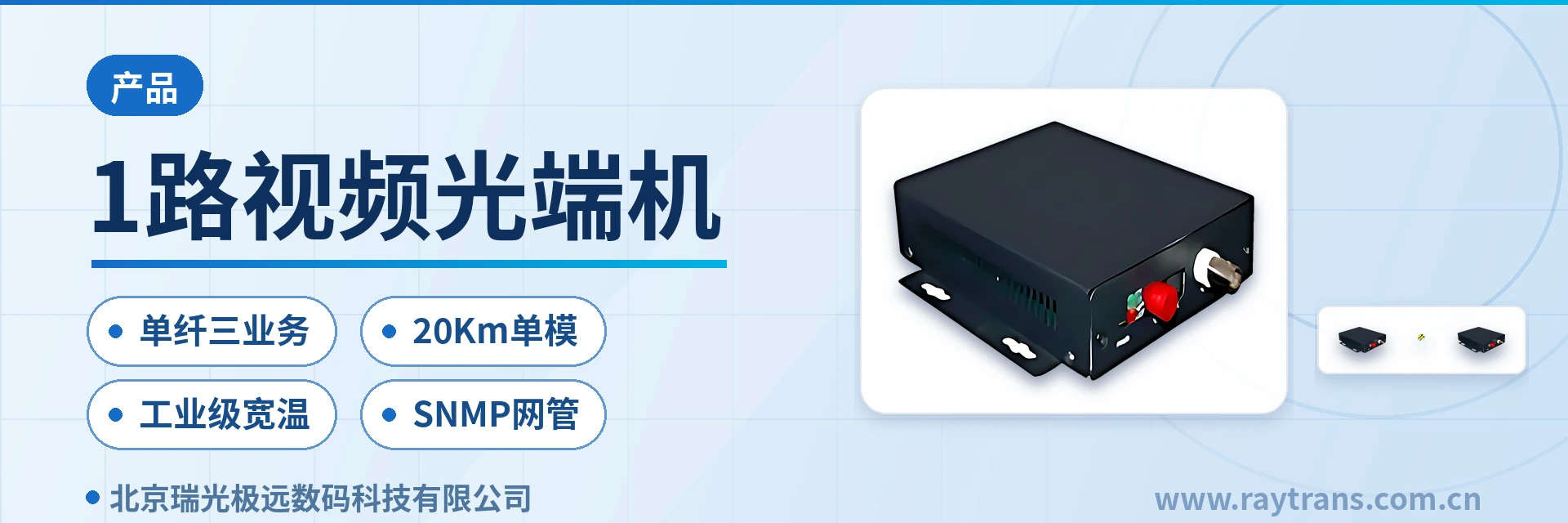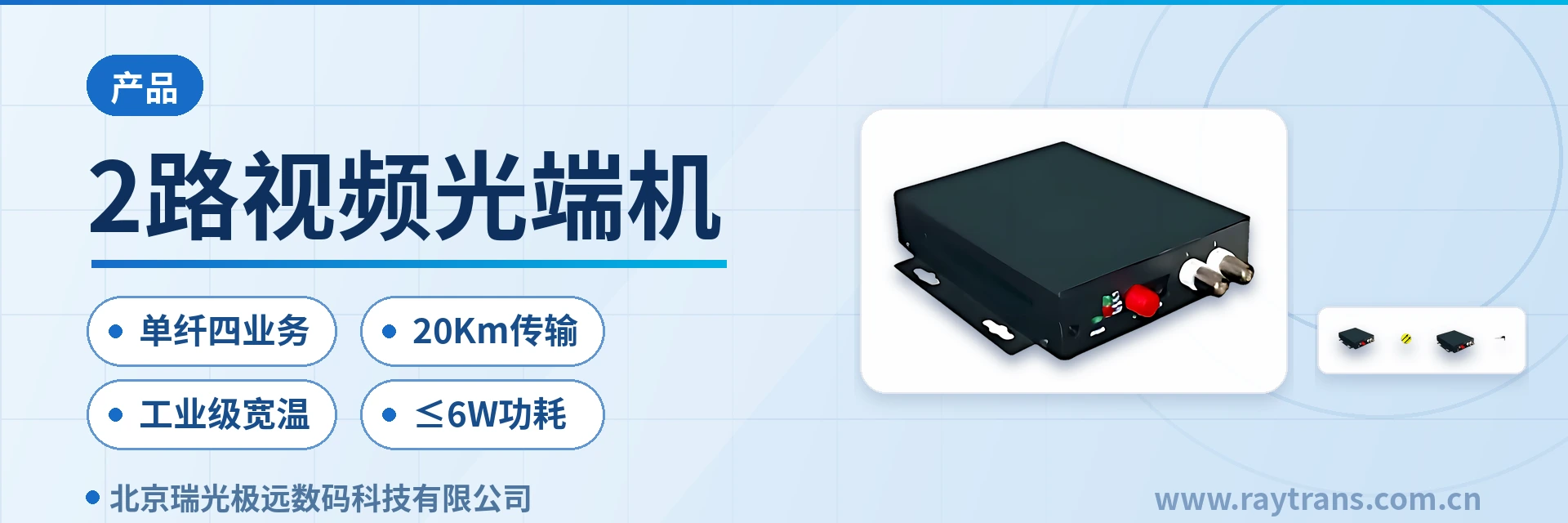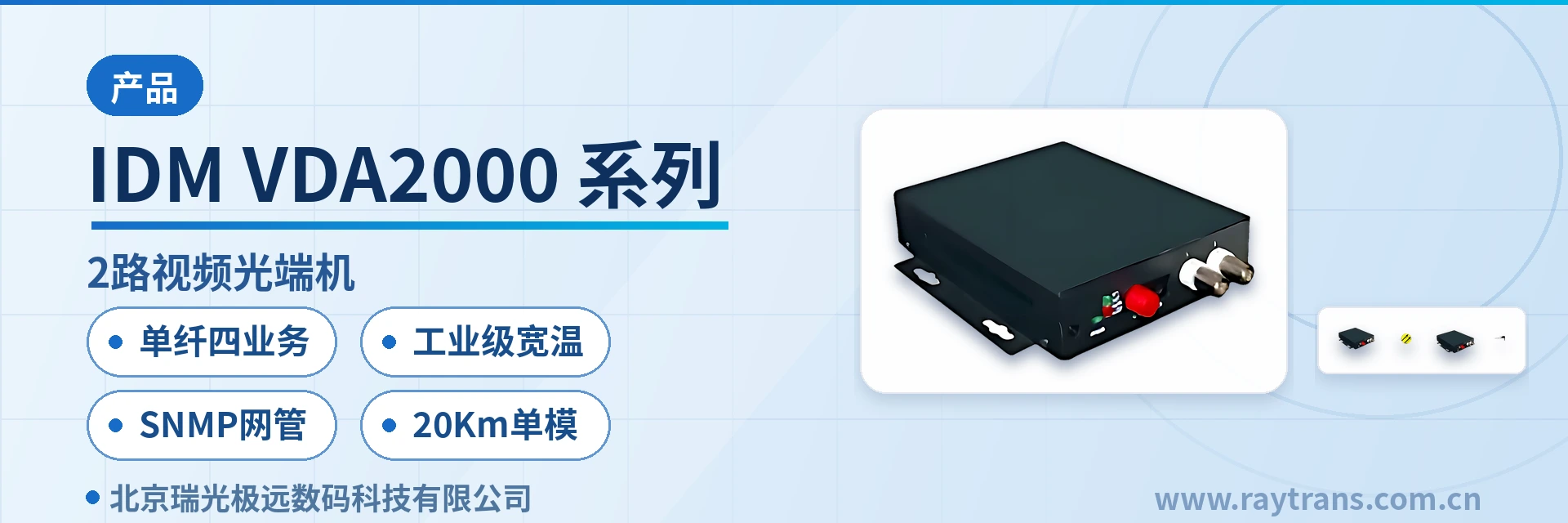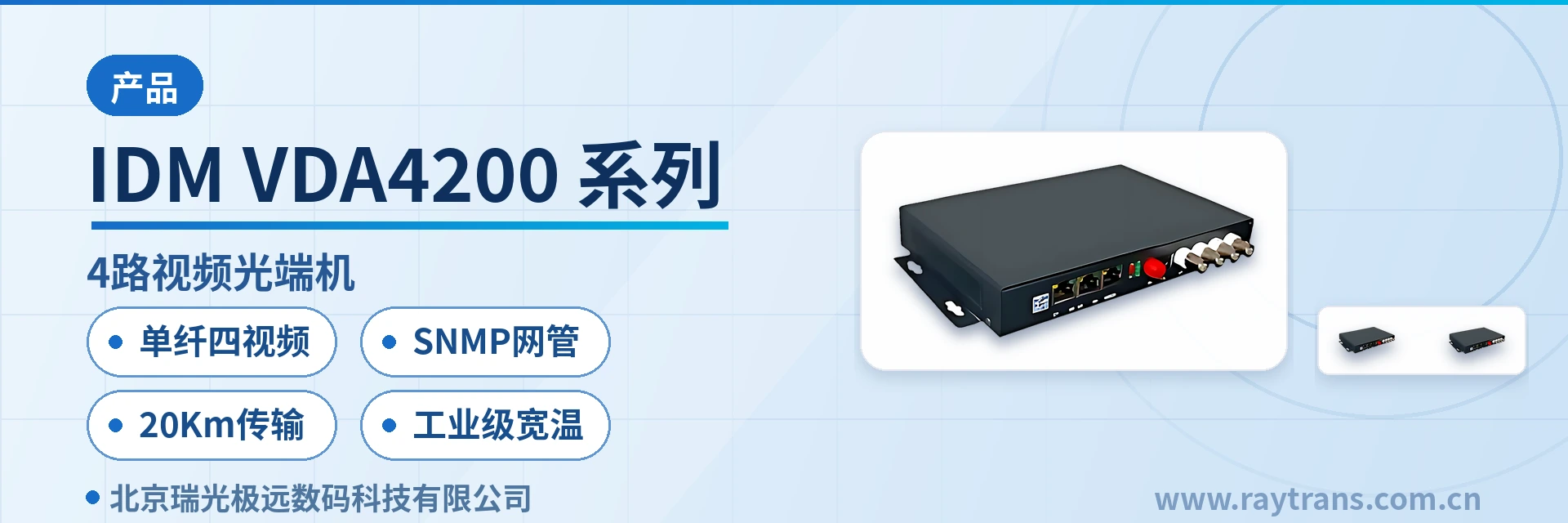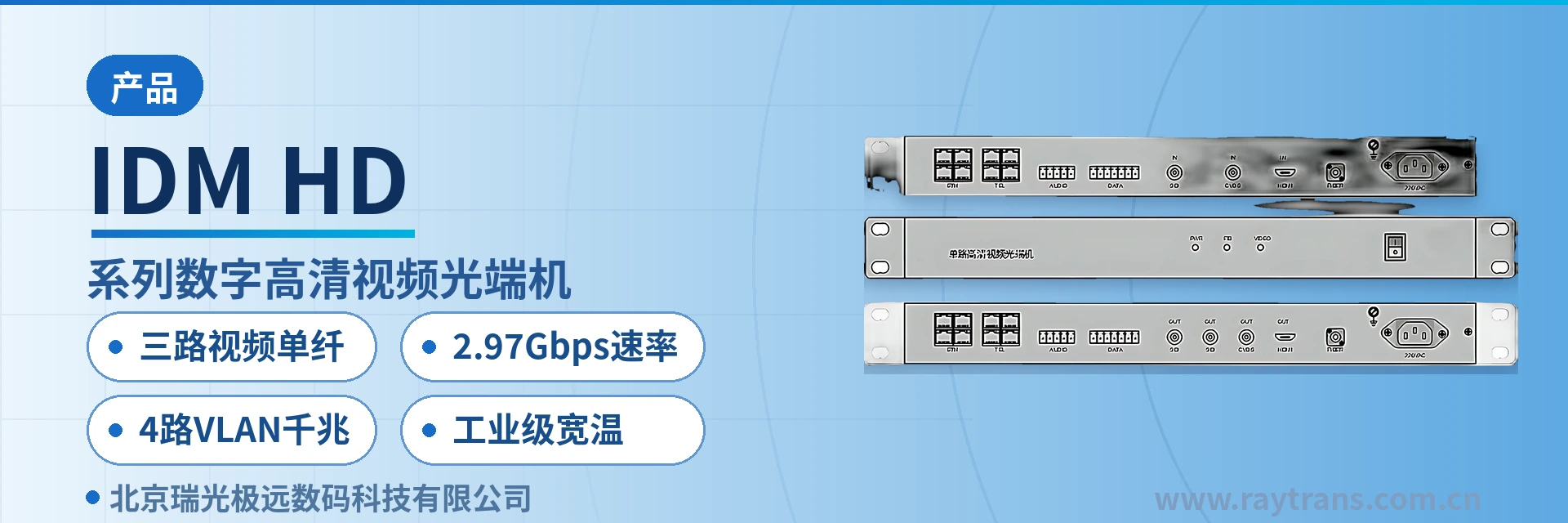
IDM-HD Series Video Optical Multiplexer
Three video channels over a single fiber, 4 telephone channels, 4 VLAN gigabit channels, dual SDI outputs at the receiver
The IDM-HD series digital high-definition video optical multiplexer is a highly reliable, high-performance serial digital optical transmission device independently developed and produced by Beijing Ruiguang Jiyuan Digital Technology Co., Ltd. for broadcast and television systems, HD conferencing systems, and similar applications. Signal formats range from 270 Mbps to 2.97 Gbps. The device supports signals compliant with digital television standards such as SMPTE-292 and SMPTE-259M, and meets the requirements of industrial-grade and broadcast product standards. A single optical fiber carries 1-channel HD/SD-SDI digital signal, dual outputs at the receiver, audio signals, and RS422/RS232 control signals
The IDM-HD series digital high-definition video optical multiplexer is an SDI high-definition video optical multiplexer developed by Beijing Ruiguang Jiyuan Digital Technology Co., Ltd. (Raytrans). It is used for long-distance transmission of serial digital video in broadcast television systems, HD conferencing systems, and similar applications. Deployed as a pair between the signal source and the display end, it is a typical model in the product showcase of professional video optical multiplexers.
The device carries 1-channel HD/SD-SDI, 1-channel HDMI, and 1-channel CVBS video—three video channels in total—over a single optical fiber, together with audio, RS422/RS232 bidirectional control data, 4 telephone channels, and 4 VLAN gigabit network channels, while the receiver restores 2 SDI outputs. As a multi-service optical multiplexer for video and multi-service convergence scenarios, it supports signal formats from 270 Mbps to 2.97 Gbps and complies with standard digital television formats such as SMPTE-292 and SMPTE-259M. Its built-in gigabit network optical multiplexer capability and telephone optical multiplexer interfaces meet the combined requirements of video surveillance and voice dispatching, and it is also suitable for the video access layer in government private network optical fiber communication solutions.
Key Specifications at a Glance: three video channels over a single fiber (SDI/HDMI/CVBS) · 2 SDI outputs at the receiver · 2.97 Gbps rate · 4 VLAN gigabit channels · 4 telephone channels · FC/PC optical port at 1310 nm or 1550 nm · transmission distance 0–100 Km · industrial-grade wide temperature -20 °C to +55 °C
As a professional optical multiplexer manufacturer, Raytrans provides a complete product showcase and technical support for this series of optical multiplexers.
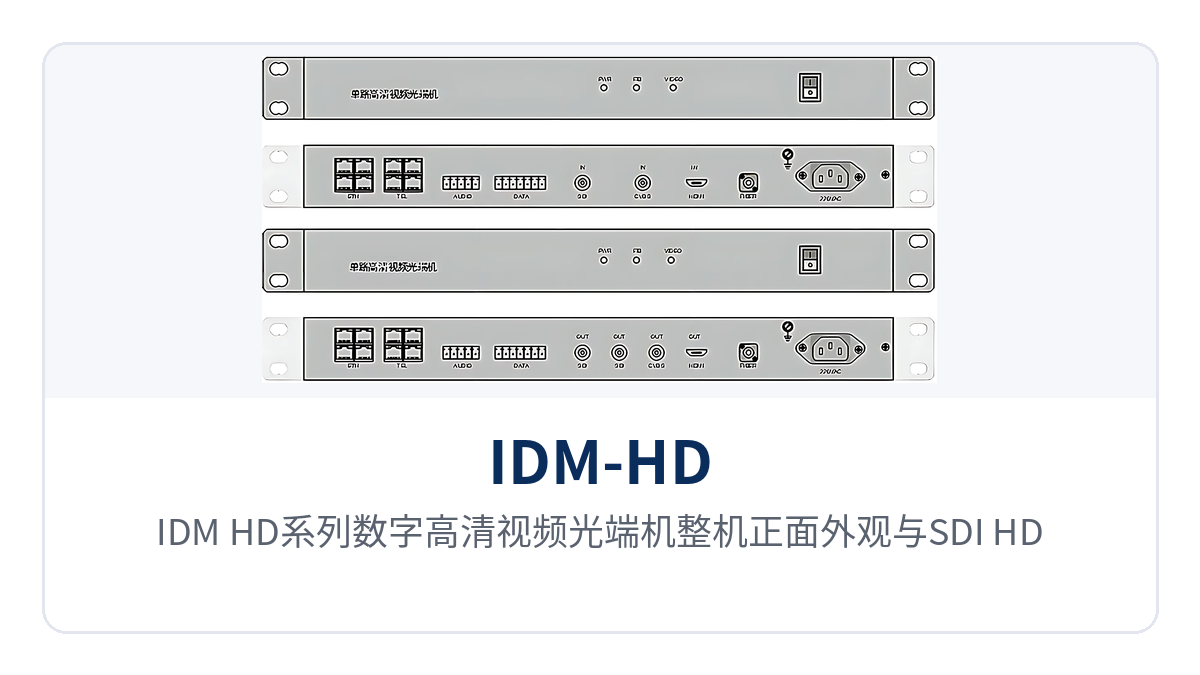
Figure 1: Front view of the IDM-HD series digital high-definition video optical multiplexer and close-up of the status indicator LEDs for the SDI and HDMI interfaces
What kind of device is an SDI high-definition video optical multiplexer?
An SDI high-definition video optical multiplexer converts serial digital video signals into optical signals, transmits them over long distances through optical fiber, and then restores and outputs them, replacing coaxial cable laid over long distances. The on-site problem it solves is this: cameras, switchers, matrices, and display ends are hundreds of meters to tens of kilometers apart, coaxial cable suffers high attenuation and is susceptible to interference, and a single optical fiber can deliver the picture as-is.
What makes the IDM-HD series special is that its services are not limited to video. A single optical link simultaneously carries three video channels in different formats, one balanced audio channel, one RS422/RS232 bidirectional control data channel, 4 gigabit network channels separated by independent VLANs, and 4 telephone channels, so the equipment box at the site side does not need a separate transmission device for each type of signal. For product showcase scenarios that need to carry video, data, voice, and network at the same time, this type of multi-service optical multiplexer completes all access on a single device.
How does a single-fiber three-channel video optical multiplexer send SDI, HDMI, and CVBS into one optical port?
The three video channels are digitized separately inside the device and then multiplexed into the same optical channel, and the receiver restores them separately by interface type without occupying each other's channels. On site, first confirm which device each of the three video channels comes from and which device it goes to, then connect the cables according to the interface markings.
- SDI channel: 1 unidirectional input, BNC interface, 75 Ω impedance; the receiver outputs 2 SDI channels, which can drive the main and standby switchers or two monitoring screens simultaneously;
- HDMI channel: 1 channel, HDMI V.1.3 interface, directly connected to conference terminals, players, and splicing processors;
- CVBS channel: 1 channel, BNC interface, used to connect legacy analog cameras or as a standard-definition backup picture.
The dual SDI outputs at the receiver are a frequently asked point on site: one video optical multiplexer can split the same picture into two channels, with the main and standby switchers, the video recorder, and the monitoring wall each connected to one, so no additional signal splitter is needed, and there is one fewer point of failure and one fewer power supply access point in the cabinet.
What functions does this device integrate?
The functions of the IDM-HD series are organized along two lines—service channels and engineering adaptation. They are fixed at the factory according to the configuration, and on site you only need to connect cables according to the port markings, with no additional software setup or parameter commissioning. The table below lists each function and its on-site effect for item-by-item verification by project.
| Function | Description |
|---|---|
| Three video channels over a single fiber | 1-channel HD/SD-SDI, 1-channel HDMI, and 1-channel CVBS are transmitted over the same optical fiber and restored separately at the receiver |
| Dual SDI outputs at the receiver | The same SDI picture is output as 2 channels at the receiver, directly driving the main and standby switchers, video recorders, and monitoring screens without an external signal splitter |
| Full-rate coverage | Operating range 270 Mbps–2.97 Gbps, covering the three rates of SD-SDI, HD-SDI, and 3G-SDI |
| SMPTE standard compatibility | Supports SMPTE-292 and SMPTE-259M serial digital video formats and performs clock recovery on 1.485 Gbps signals |
| All-digital uncompressed | Video goes directly onto the fiber without compression encoding, with no encoding and decoding latency, real-time lossless restoration, and broadcast-grade specifications |
| Brand device compatibility | Interfaces with splicing processors, matrices, cameras, and conference terminals from major brands; the output image has no snow, no noise, no screen flicker, and no screen tearing |
| RS422/RS232 bidirectional data | 1 control data channel with bidirectional transparent transmission, backward compatible with 115200 bps and below, used for PTZ and front-end device control |
| 4 VLAN gigabit network channels | 4 gigabit Ethernet channels separated by independent VLANs, 10/100/1000Base-T adaptive, with services isolated from each other |
| 4 telephone channels | 4 telephone interfaces, RJ11, transmitted over the same fiber as video, audio, and data |
| Automatic equalization and bit error correction | Built-in automatic cable equalization keeps the picture clear and stable with long cable inputs; a bit error correction circuit provides resistance to burst interference |
| ESD and status monitoring | Built-in ESD protection circuit; status indicator LEDs monitor key parameters online |
| Selectable wavelength | Output optical wavelengths of 1310 nm and 1550 nm, configurable with 16 CWDM wavelengths, compatible with ITU-T G.694.2 |
| Industrial-grade construction | Industrial-grade dust-proof, freeze-proof, lightning-proof, and high-temperature-resistant design; all-aluminum alloy body for good heat dissipation; standalone desktop and 1U rack-mounted card versions available |
Technical Specifications
The interfaces and specifications of the IDM-HD series are listed by service category—video, audio, optical path, data, network, telephone, and electrical/environmental—for item-by-item verification by project. Where on-site conditions differ from the table below, the factory configuration sheet and the manufacturer's technical documentation shall prevail.
Video and Audio Interface Parameters
| Item | Parameter/Specification | Description/Applicable Conditions |
|---|---|---|
| Number of SDI channels | 1 unidirectional, 2 SDI outputs at the receiver | The same picture is duplicated into two channels at the receiver |
| Video signal format | SMPTE-292, SMPTE-259M serial digital video signals | Covers SD-SDI and HD-SDI formats |
| Video signal rate | 270 Mbps, 1.485 Gbps, 2.97 Gbps | Corresponding to the three rates of SD-SDI, HD-SDI, and 3G-SDI |
| Automatic cable equalization | Better than 250 m at 270 Mbps, better than 100 m at 1.485 Gbps | Adaptive within this range of front-end coaxial cable length |
| Return loss | Typical value >15 dB (1.485 Gbps) | Reflects the interface impedance matching level |
| Rise and fall time | <0.8 ns | Affects the edge quality of the data stream |
| Data precision | 10 Bit | SDI video sampling bit width |
| Impedance | 75 Ω | Consistent with the video ports of cameras and matrices |
| Input signal level | >380 mVP-P | Lower limit of the level recognizable at the input side |
| Output signal level | 800 mVp-p±10% | Output level at the receiver |
| HD-SDI jitter | <0.2 UI (134 ps) @100 kHz, <1.0 UI (673 ps) @10 Hz | Determines whether the switcher can lock stably |
| SDI jitter | <0.2 UI (740 ps) | Jitter control for standard-definition streams |
| SDI interface form | BNC | Standard coaxial interface |
| HDMI channel | 1 channel, HDMI V.1.3 | Connects to conference terminals, players, and splicing processors |
| CVBS channel | 1 channel, BNC | Legacy analog cameras or standard-definition backup picture |
| Audio channel | 1 channel, balanced 600 Ω, typical 0 dBm, 10 Hz–15 KHz, 24 Bit, SNR ≥80 dB | Audio interface is a Phoenix terminal, transmitted in sync with video |
Optical Interface, Data, Network, and Telephone Parameters
| Item | Parameter/Specification | Description/Applicable Conditions |
|---|---|---|
| Optical wavelength | 1310 nm, 1550 nm, plus 16 configurable CWDM wavelengths | Compatible with ITU-T G.694.2; the two ends use paired wavelengths |
| Transmitter optical power | -7±2 dBm | Used for the link optical power budget |
| Receiver sensitivity | -22 dBm to -3 dBm | The link works normally when the received optical power falls within this range |
| Optical interface form | FC/PC | Corresponds to the on-site ODF termination method |
| Transmission distance | 0–100 Km | Actual reachable distance is calculated from optical cable attenuation and connector loss |
| Data interface | 1 channel RS422, RS232, bidirectional, Phoenix terminal | Backward compatible with 115200 bps and below, used for transparent transmission of control commands |
| Network interface | 4 channels separated by independent VLANs, RJ-45 | 10/100/1000Base-T adaptive Ethernet |
| Telephone interface | 4 channels, RJ11 | Transmitted over the same fiber as video, data, and network |
| Input voltage | AC 220 V±5% | Mains power access in equipment rooms and equipment boxes |
| Power consumption | <15 W | Long-term online operation of the unit |
| Operating temperature | -20 °C to +55 °C | Industrial-grade wide temperature, suitable for outdoor equipment boxes and unattended cabinets |
| Storage temperature | -40 °C to +65 °C | Warehousing and transportation conditions |
| Humidity | 0–95% (non-condensing) | High-humidity environments require non-condensing conditions |
| Dimensions | 435 mm×250 mm×44 mm (L×W×H) | 1U height for easy rack mounting |
| Weight | Approx. 2 Kg | Weight of the unit including the body |
How to understand the 2.97 Gbps and SMPTE standards of a broadcast-grade video optical multiplexer
A broadcast-grade video optical multiplexer transmits video as the original stream, neither compressing nor re-encoding it, so picture quality depends only on interface specifications and optical link quality. SMPTE-259M specifies the 270 Mbps SD-SDI serial digital interface, SMPTE-292M specifies the 1.485 Gbps HD-SDI interface, and 2.97 Gbps corresponds to the 3G-SDI rate.
The operating range of the IDM-HD series covers these three rates and performs clock recovery on 1.485 Gbps signals, with HD-SDI jitter controlled within 0.2 UI (100 kHz), so the stream restored at the receiver can be recognized directly by switchers and matrices without additional format conversion equipment on site.
How does all-digital uncompressed transmission preserve picture detail?
The significance of all-digital uncompressed transmission is that the picture bears no traces left by compression algorithms and no latency introduced by encoding and decoding. After long-distance coaxial cable runs, interference from power cables, variable-frequency drives, and lightning surges along the route easily appears, causing snow, noise, screen flicker, and screen tearing in the picture; analog frequency modulation and phase modulation optical multiplexers also suffer from intermodulation interference, so multiple services affect each other when transmitted over the same fiber.
- Built-in automatic cable equalization keeps the picture clear and stable even when front-end cable lengths vary;
- A bit error correction circuit corrects burst interference, improving availability in thunderstorms and strong electromagnetic environments;
- A built-in ESD protection circuit reduces the risk of damage to ports from plugging or unplugging and induced voltage;
- Interfaces with splicing processors, matrices, cameras, and conference terminals from major brands; the output image has no snow, no noise, no screen flicker, and no screen tearing.
Typical Application Scenarios
Three types of sites often choose the IDM-HD series: broadcast television private networks, industrial security surveillance private networks, and high-definition video conferencing private networks. What they share is that a single optical fiber must simultaneously carry video, control data, and network, while they differ in picture standards, environmental conditions, and O&M approach.
Broadcast Television Private Networks
SDI links between TV station studios, outside broadcast vans and playout equipment rooms require lossless video and controlled latency. The IDM-HD series receives SD-SDI and HD-SDI signals per SMPTE-292 and SMPTE-259M, and the dual SDI outputs at the receiver can feed the main switcher and the backup switcher or a video recorder respectively, saving one signal distributor in the cabinet.
The HDMI port connects to review monitors and video walls, the CVBS port connects to legacy monitoring equipment or serves as a standard-definition backup, and all three video channels share the same optical cable route. When the distance from the equipment room to the studio is long, or cross-building transmission is required, a single optical fiber replaces a group of laid video coaxial cables.
Industrial Security Surveillance Private Network
At surveillance sites in plants, mining areas, substations and pipeline valve chambers, temperature differences are large, dust and thunderstorms are common, and most cabinets are unattended. The IDM-HD series operates at an industrial-grade wide temperature of -20℃ to +55℃, adopts an industrial-grade dust-proof, freeze-proof, lightning-proof and high-temperature-resistant design, and its all-aluminum alloy housing provides good heat dissipation, so it can be installed in outdoor equipment boxes and mounting pole cabinets.
The 4-channel VLAN gigabit network separates camera, access control and office network traffic over the same optical fiber, isolating services from each other; the 4 telephone channels carry dispatching calls between job roles, the RS422/RS232 ports are used for PTZ and front-end device control, and video and data do not need separate cabling.
High-Definition Video Conferencing Private Network
Optical cable resources often already exist between conference rooms and the main venue, but the number of cores is limited, and one device must connect conference terminals, cameras and the large display at the same time. The HDMI port of the IDM-HD series connects to conference terminals and splicing processors, the SDI port connects to broadcast-grade cameras, the CVBS port connects to standard-definition signal sources, and the two SDI outputs at the receiver feed the main and backup display links respectively.
The device is plug-and-play and requires no configuration; the picture is available once wiring is completed on site according to the port markings. In conference system upgrade projects where existing video optical multiplexers can only carry a single video format, this device can receive signals in three formats over the same optical fiber at once.
How Far Can an SDI Optical Multiplexer Transmit? How Is the Link Budgeted?
The nominal transmission distance of the IDM-HD series is 0–100Km, and the actual reachable distance is jointly determined by the transmit optical power, receiver sensitivity and line loss. The transmitter optical power is -7±2dBm and the receiver optical sensitivity is -22dBm to -3dBm; after deducting the attenuation per kilometer of the optical cable, the number of splice points and fiber adapters section by section, the remaining margin is the usable distance.
- When the distance exceeds 20Km, prefer the 1550nm window, which has lower attenuation, or configure CWDM wavelengths per project to separate other services in the same cable;
- The transmit and receive wavelengths at both ends of a single-fiber link must be paired: if one end transmits at 1310nm, the opposite end transmits at 1550nm;
- The optical port is FC/PC; the patch cord termination method must be consistent with the on-site ODF, and the end face must be cleaned before plugging or unplugging;
- Reserve more than 3dB of margin at both ends of the link to cope with optical cable aging and connector contamination;
- For links with many route sections and patch points, measure the received optical power on site first, then decide whether to replace the optical module or add a repeater.
How to Select and Install
Selection starts with the installation form, then the optical module and service combination. The IDM-HD series offers two structures: a standalone desktop unit and a 1U rack-mounted plug-in card unit. The desktop unit suits small-scale single-point deployment, and the 1U rack-mounted plug-in card unit suits centralized rack mounting in equipment rooms; both use an all-aluminum alloy housing with good heat dissipation.
- Connect the power supply at AC 220V±5%; the overall power consumption is <15W, so the power supply access and heat dissipation load in the cabinet are small;
- The device dimensions are 435mm×250mm×44mm and its weight is about 2Kg; check the cabinet depth and bracket position before rack mounting;
- On-site installation is plug-and-play; complete the video, audio, data, network and telephone wiring in sequence according to the port markings;
- After power-on, check the status indicator LEDs first, then verify the video and data receive/transmit channel by channel;
- Avoid small-radius coiling and long-term stress on optical patch cords, and leave slack when tying pigtails.
Conclusion
As an SDI high-definition video optical multiplexer, the IDM-HD series aggregates three video channels (SDI, HDMI and CVBS), balanced audio, RS422/RS232 bidirectional data, a 4-channel VLAN gigabit network and 4 telephone channels onto a single optical fiber. The dual SDI outputs at the receiver eliminate the need for a signal distributor, and the 2.97Gbps rate and all-digital uncompressed transmission meet the broadcast-grade requirements of SMPTE-292 and SMPTE-259M.
Broadcast television private networks, industrial security surveillance private networks and high-definition video conferencing private networks can all be deployed with the same device, and the 0–100Km transmission distance and industrial-grade wide-temperature structure cover both equipment room and outdoor cabinet installation conditions. For specific optical module wavelengths, CWDM configurations and interface combinations, place orders after confirming with the optical multiplexer manufacturer Raytrans according to actual project conditions; for government private network optical fiber communication solutions, the port combinations of multi-service optical multiplexers, gigabit network optical multiplexers and telephone optical multiplexers can also be planned together for product showcase and future capacity expansion.