IDM DT1000
IDM DT1000
The IDM DT1000 Elevator Status Acquisition Controller includes a full-function access type and a standard-function access type. It is used for collecting and reporting elevator operation status, remote control and management of elevators, and emergency in-carriage call-for-help alarms. It can be applied to various aspects of smart elevators.
IDM DT1000 Elevator Status Acquisition Controller and Monitoring Platform
As a means of public transportation, elevator safety concerns all sectors of society, and the government conducts annual inspections of elevators. However, due to the high dispersion of elevators, the large number of management entities, and the varying levels of professionalism among maintenance teams, as well as insufficient elevator maintenance fees collected from property fees, the maintenance conditions of elevators vary considerably.
The main entities responsible for elevator management include: elevator user units, elevator maintenance units, elevator manufacturers, elevator inspection units, and enterprise platform construction units.
To this end, many local governments have built elevator emergency response and IoT remote monitoring platforms. These typically include an elevator management overview map, an elevator emergency rescue and disposal system, an elevator IoT remote monitoring system, an elevator maintenance management system, an elevator operation early warning and alarm system, and an elevator big data analysis system.
At the same time, as part of the three-dimensional transportation network, elevators are increasingly evolving toward convenient transfers. For example, by sensing the distance of users entering from parking lots or main entrances, elevators can automatically wait at the corresponding floor.
For safety management purposes, many organizations (such as hotels, commercial office buildings, and schools) have implemented card-based access control to specific floors. These card-based management systems can be upgraded to mobile APP management.
In some densely populated business districts, floor reservation can be used to provide rapid zone-based dispatching. It can also provide reasonable travel time suggestions for users who have made reservations.
When delivery unmanned vehicles ride elevators, they need to exchange information with the elevator. This requires an elevator control (lift control) system. China has a huge existing elevator market, and there is significant demand for retrofitting in this regard.
The IDM DT1000 Elevator Status Acquisition Controller includes a full-function access type and a standard-function access type. It is used for collecting and reporting elevator operation status, remote control and management of elevators, and emergency in-carriage call-for-help alarms. It can be applied to various aspects of smart elevators.
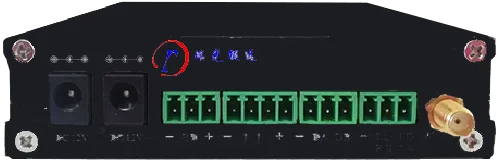
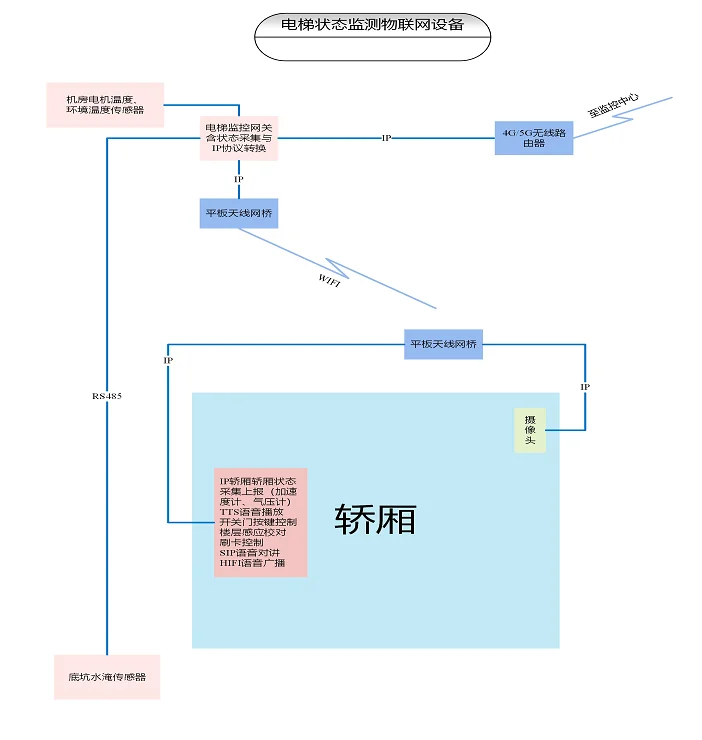
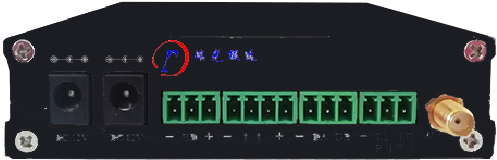
IDM DT1000 Standard Type Access Functions
- The main functions of the standard type device are as follows:
- IP in-carriage elevator status acquisition and reporting (accelerometer, barometer)
- TTS voice playback
- Door open/close button control
- Floor sensing calibration
- Card swipe control
- SIP voice intercom
- HIFI voice broadcast
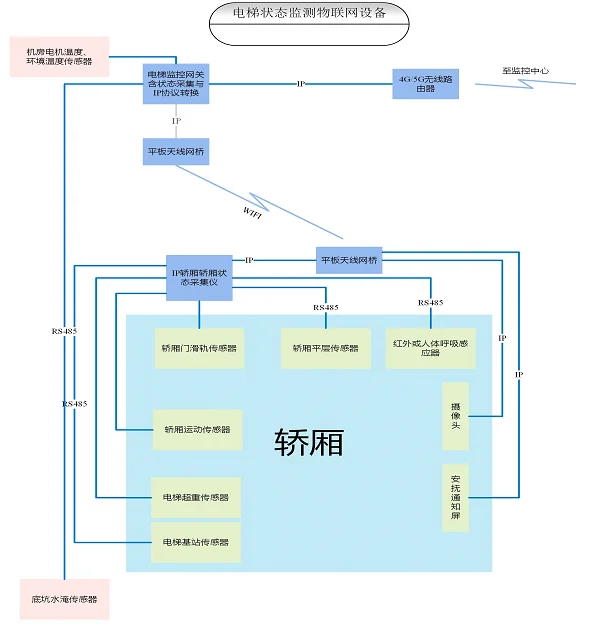
The full-function type also has the functions of the standard type, and can additionally connect to base station sensors, leveling sensors, door opening sensors, elevator overload sensors, human infrared detection sensors, etc.
Typically, elevator status is transmitted via 4G/5G (installed inside the carriage for easy installation) or a fixed IP network (usually sharing the same fiber optic network as the campus surveillance system) to the enterprise/community service center, which then connects to the government's unified monitoring platform.
The IDM DT1000-5G version has a built-in 4G or 5G mobile communication module. It uses the standard MQTT IoT protocol to communicate with the community elevator monitoring center for status reporting and control command download. It can also be used for high-fidelity music voice broadcast and uses the standard SIP softswitch protocol for voice call intercom.
The IDM DT1000-IP can connect to a local IP transmission network, eliminating concerns about monthly usage fees, and the transmission channel is stable, though the initial installation cost is slightly higher. This device uses the standard MQTT IoT protocol to communicate with the community elevator monitoring center for status reporting and control command download. It can also be used for high-fidelity music voice broadcast, distress voice alarms, etc.
The IDM DT1000 can also be connected to AI smart cameras. When the camera detects an electric bicycle being pushed into the carriage, the elevator will not close its doors or ascend, while playing a safety warning voice to discourage residents from bringing electric bicycles up to high floors.
The IDM DT1000 can also work with delivery robots to enable robots to enter the elevator for upstairs delivery.
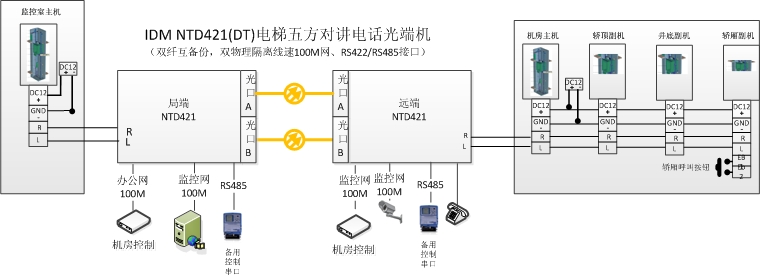
Many regions require that voice intercom be implemented by connecting to the elevator's existing five-party intercom system to enable remote communication with personnel inside the carriage.
The community center can monitor the status of all elevators:
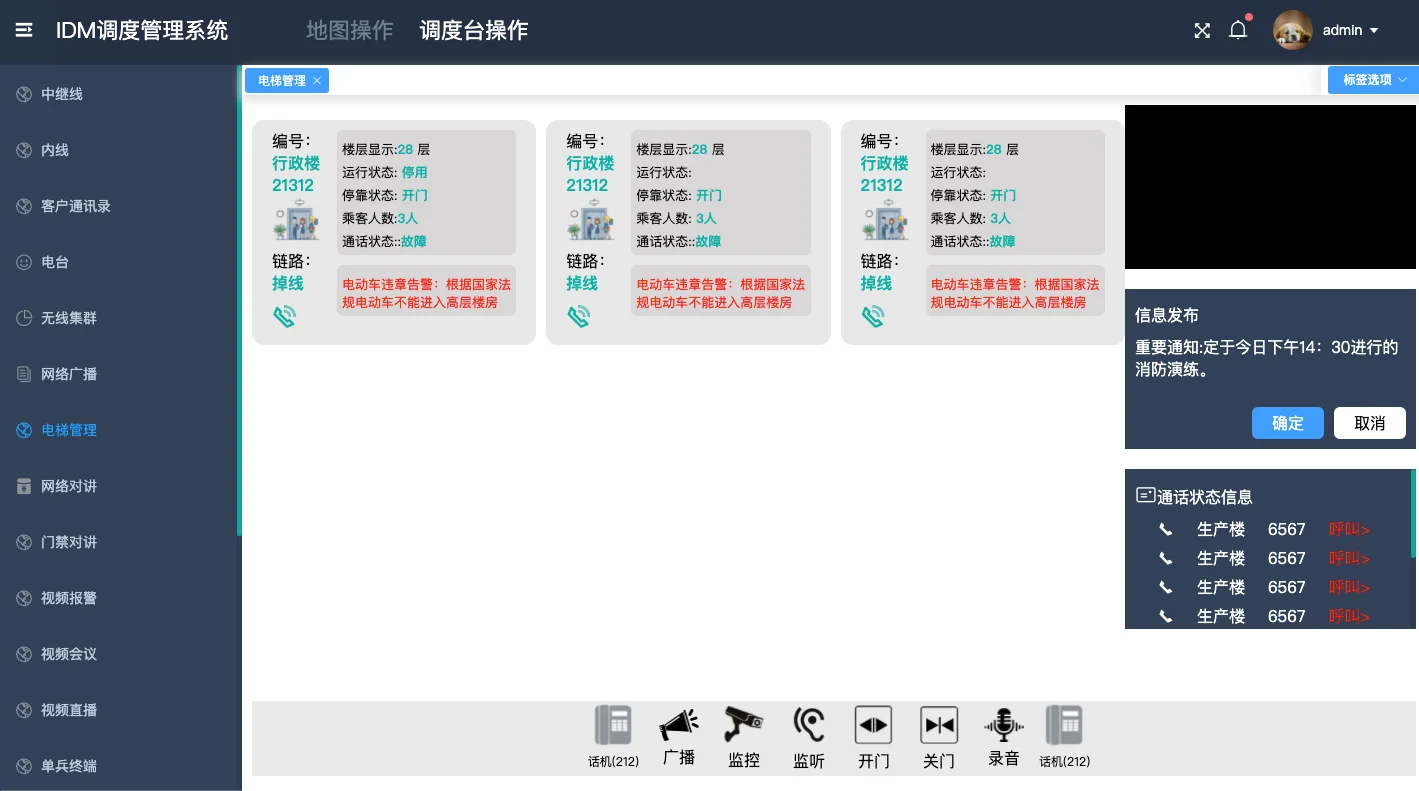
(Missing alarm pop-up work order filling, except for automatic pop-up)
(Dispatch management of rescue work orders is implemented by another software system)
(Dispatch management of elevator repair work orders is interfaced with another software system)
(Elevator inspection software includes government spot checks, owner inspections, property inspections, maintenance company inspections, etc. Inspection big data will be displayed in the elevator situation assessment system)
Mobile APP for elevator reservation
Data statistics and analysis
Ability to compile elevator fault occurrence statistics by region, manufacturer, maintenance company, and time period;
Ability to compile elevator complaint statistics by region, manufacturer, maintenance company, and time period. Each complaint should include the complaint content and number of complaints, but should not include the complainant's personal information.
Elevator big data analysis system
Information services centered on elevator safety, emergency rescue, and elevator maintenance.
The smart elevator big data platform includes three major systems: information security assurance system, construction and operation assurance system, and standard specification assurance system.
Visualized big data display platform
Large-screen display, elevator supervision brain
- Overview statistics: total number of elevators in the region, total number of elevators out of service due to faults, total number of elevators with accidents, total number of elevators with qualified maintenance, total number of elevators operating with problems
- Maintenance company statistics: total number, total number of user units, total number of parts companies, total number of on-duty employees, total number of rescue teams
- Elevator manufacturer statistics: total number, total number of local manufacturer offices, total number of elevators directly maintained by manufacturers, total number of insured elevators, total number of insurance companies
- Operation statistics: cumulative elevator operating mileage for the day, cumulative number of stops, cumulative total number of alarms
- Complaint content statistics: fault complaints, power outage complaints, maintenance complaints, entrapment complaints, management complaints
- Maintenance content statistics: elevator maintenance completion rate, per-unit maintenance cost statistics, maintenance technical complaints, maintenance personnel complaints, maintenance company qualification audit, maintenance personnel qualification audit
- Inspection statistics: total monthly inspection requirements, number of inspections completed on time in the current month, number of inspections expected but not completed
- Alarm statistics: total monthly alarms, total monthly rescue work orders, total monthly hidden hazards, total unresolved hidden hazards; total daily IoT alarms, total daily personnel alarms, total daily rescue teams dispatched, total daily elevator overhauls, total daily shutdowns
- Property company list: name, location, elevator list
- Rescue company list: name, location, qualifications
The visualization interface is customized according to user requirements and usage habits.
View the trajectories, map positioning, video, case reports, and other trace information of emergency rescue and routine maintenance personnel, enabling immediate intervention and command issuance.
FAQs
What Is the Definition of Communication?
Communication: the exchange and transmission of information between people, or between people and nature…
View answerWhat is the RS232 Interface Definition?
RS232 interface is formally known as the "technical standard for serial binary data exchange interface between Data…
View answer