GIS
GIS
Cement logistics industry solution based on GIS IoT big data. Cement industry logistics management arranges delivery sequence based on sales information, while tracking cargo in-transit status, predicting arrival time, reasonably allocating goods, and avoiding potential logistics risks, to gain profit and efficiency from logistics.
Cement Logistics Industry Solution Based on GIS IoT Big Data
Cement industry logistics management arranges delivery sequence based on sales information, while tracking cargo in-transit status, predicting arrival time, reasonably allocating goods, and avoiding potential logistics risks, to gain profit and efficiency from logistics!
The GIS-based logistics dispatch management system can intuitively display logistics resources and logistics processes, optimize logistics efficiency, reduce costs, and improve overall profitability.
The entire logistics system includes a command center based on the GIS platform, vehicle-mounted IoT audio/video communication terminals, and carrier (driver) APP information terminals.
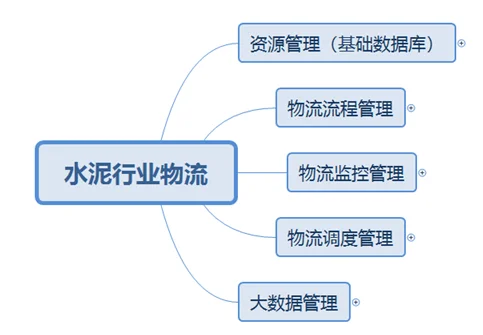
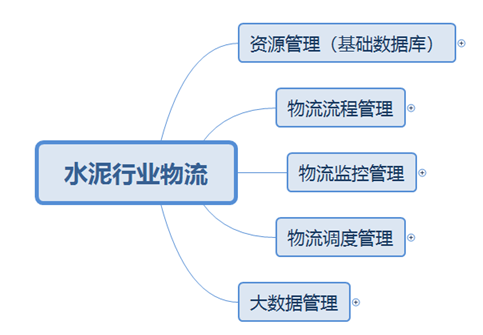
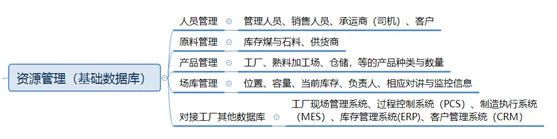
I. Resource Management
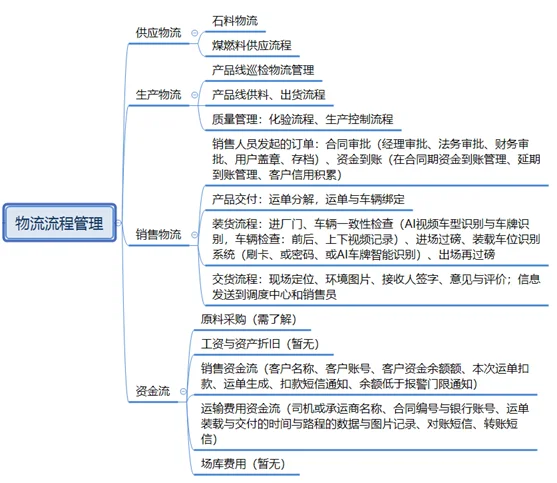
II. Process Management
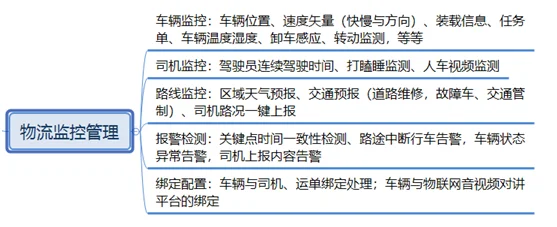
III. Logistics Monitoring Management
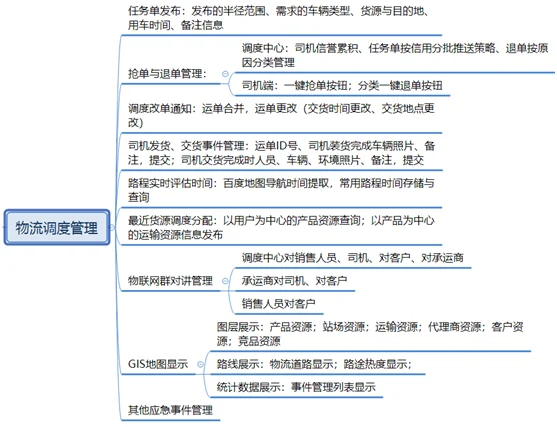
IV. Logistics Dispatch Management
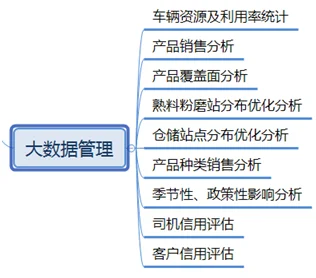
V. Logistics Data Analysis
Logistics, capital flow, business flow, and workflow management
Group customer management, carrier management, service capability management, raw material supplier management;
Settlement, accounting, statistics, reconciliation
Loading, unloading, delivery, reassignment
VI. GIS Platform
Since the commonly used Baidu Navigation and Amap navigation software support fewer layers and do not support user-specific resource annotation and management, in practical use, commercial maps are usually converted to a standard geographic coordinate system, loaded onto the GIS platform as a base map, and then user-specific layers such as grids, routes, resource points, etc. are added on top, facilitating zooming, panning, and various calculations. Resources can also be dispatched on the GIS platform.
For example, on the GIS platform, annotations such as vehicle type + load capacity + speed vector + task category can be marked to facilitate resource management and road status monitoring.
For another example, various event annotations can be made. Monitoring and alarm categories include: unloading at non-destination, incomplete unloading, overtime unloading, and cross-region selling.
VII. APP Terminal
(1) The IOT365 APP is an information operation terminal for carriers or drivers after leaving the vehicle, enabling functions such as event reporting, audio intercom, direct calling, and order receiving. Since mobile phones are multi-purpose devices, information may not be received in a timely manner.
(2) The IOT365 APP provides a WeChat-like operation interface, but with real-time broadcast, IoT terminal management (such as vehicle-mounted terminals, elevator intercom, access control intercom), portable dispatch console switching function, and backend big data collection. With center-side coordination, it can achieve intercom with WeChat groups.
(3) Main Functions
Event Management: loading/unloading events, loading/unloading quantities, loading/unloading location events, sign-off and handover
Intercom Management: audio intercom, video surveillance, IoT data collection
VIII. Vehicle-Mounted Terminal
The vehicle-mounted terminal mainly implements functions such as audio intercom, video surveillance, sensor/actuator data communication, ensuring monitoring and management of vehicle driving status. It includes the following functions:
Audio intercom
Quick operations such as level-one alarm
AI smart camera, tarpaulin open/close recognition, dump body sensor recognition, electronic lock seal
Forward/reverse rotation monitoring of commercial concrete mixer trucks (reverse indicates discharging).
RFID packaging delivery scanning
IX. Vehicle Dispatch Center
Transition from experience-based, fixed departure mode to visualized dispatch and intelligent statistics functions. Dispatch personnel can obtain comprehensive and timely dynamic information from the system, make reasonable resource allocation, and greatly reduce the "vehicle waiting" phenomenon at construction sites.
1. Solving the "vehicle waiting" problem at construction sites commonly occurring in dispatch
The voice dispatch system allows dispatch personnel to easily control production, command vehicles, and minimize the "vehicle waiting" phenomenon at construction sites. The dispatch interface intuitively and concisely shows the vehicle usage status at each construction site and the operating status of each vehicle, enabling timely production arrangement and reasonable vehicle dispatch to meet more construction site task requirements. Vehicles can also be directly called, making dispatch faster, more convenient, and more effective through timely voice communication.
2. Solving the "material supply interruption" problem at construction sites commonly occurring in dispatch
It can intuitively and dynamically understand the vehicle quantity arrival status at each construction site, as well as the distance of vehicles to the construction site, accurately making reasonable dispatch, greatly reducing the "material supply interruption" phenomenon at construction sites, avoiding product quality issues and customer complaints caused by prolonged "material supply interruption," reducing customer service complaints, improving corporate reputation, and enhancing customer loyalty.
3. Emergency Dispatch
During material transportation, when serious traffic problems occur (such as traffic jams or road closures), and the original plan was to deliver materials to location A, if serious traffic problems are encountered and material quality may be affected by time, the situation can be urgently reported to the dispatch center through the Yiruitong voice system, and the transportation route or delivery target can be temporarily changed on the system. This greatly improves work efficiency and enhances customer satisfaction.
4. Solving the navigation blind spot problem in dispatch
Since the enterprise receives orders from several or even a dozen construction sites each month, and drivers are often unfamiliar with the routes to construction sites, asking for directions can take more than 10 minutes. Since dispatch personnel do not know the driver's specific location or the construction site's specific location, they cannot provide correct navigation to drivers, causing drivers to take wrong routes, wasting time, exacerbating vehicle shortages, and increasing unnecessary fuel consumption. Drivers making phone calls while driving also affects driving safety.
5. Reducing fuel consumption and other costs
By proactively and timely understanding vehicle status at construction sites and on the road, "vehicle waiting" at construction sites can be avoided, thereby reducing fuel consumption. The navigation function reduces drivers taking wrong routes, reducing fuel consumption. The overspeed alarm function addresses the fact that high speed increases vehicle fuel consumption. The system automatically calculates each vehicle's mileage, monthly concrete delivery volume, and fuel consumption, accurately calculating each vehicle's fuel consumption per cubic meter of concrete per kilometer. Through comparison between vehicles, rewarding the good and penalizing the bad, management orientation encourages drivers to consciously save fuel, effectively reducing average fuel consumption.
6. Restraining drivers' improper behavior
Drivers' dishonest behavior causes great losses to enterprise operations, such as fuel theft, material theft, overspeeding, loafing, intentional detours, etc. The system provides intelligent supervision means for fleet management. With "electronic eyes" watching drivers, dishonest behavior of some drivers can be reduced or eliminated.
The IDM-MCC dispatch system can use vehicle-mounted mobile APP or professional equipment to implement functions such as cab video surveillance, PTT intercom, and BDS/GPS trajectory upload.
7. Intercom Functions:
4G network intercom, using an appropriate data SIM card.
Group call: provides "one-to-one" and "one-to-many" quick calls, automatic group formation, no dialing required, instant intercom connection, instant monitoring;
Dispatch function: provides vehicle/vessel backend GPS satellite monitoring dispatch system, determining real-time positions of vehicles/vessels/personnel anytime and anywhere, real-time voice dispatch, automatically selecting vehicles/personnel for dispatch, holding conference calls, facilitating management;
Voice recording: records voice content of each call, with on-demand query and playback.
Single call: one-to-one intercom between users;
Group call: one-to-many intercom between users;
Group management: multi-group management and temporary group management
Multi-group online: one terminal can be defined in several different groups, and the system automatically scans whether the terminal is busy. If the terminal is not busy, it can receive calls from different groups.
Online status display: the terminal can display the status of users in the same group, such as online, offline, group call, and single call status.
The vehicle sends data such as position and speed to the dispatch center, using two working modes:
- Timed, fixed-distance active transmission mode, with intervals configurable by the dispatch center
- Query mode, where current status data is sent only after receiving a query command from the control center
8. Alarm Functions
- Zone monitoring alarm: the dispatch center defines alarm zones, and the system issues alarm messages when vehicles enter or leave the zone
- Overspeed alarm: if the vehicle's speed exceeds the limit, the system issues an alarm message
- Timeout alarm: if the vehicle stops beyond a certain time limit, the system issues an alarm message
- Transport timeout alarm: if the vehicle's transport process exceeds a certain time limit, the system issues an alarm message
9. Vehicle Dispatch Situation Display Content:
- Real-time GPS positioning, fuel consumption statistics, mileage statistics, driver management records, accident source alarm
- Vehicle management records, status monitoring, data export, trajectory playback, task completion notification
- Driving trajectory map printing, driving time statistics, unloading monitoring, fuel consumption statistics, door status
- Statistics by time period, air conditioning monitoring, split-screen map display, alarm query, permission levels
- Monthly report statistics function, data statistics by time period, alarm statistics, overspeed alarm
- Landmark annotation, emergency alarm, zone vehicle query
FAQs
What Are the Functions and Advantages of Video Optical Terminals?
The function of a video optical terminal is to convert one or multiple channels of analog video signals into optical…
View answerWhat is the difference between a Video Optical Terminal and a Network Video Server?
Composition and Function of Video Optical Terminal and Network Video Server An optical terminal is a device used to…
View answerWhat are common issues when using optical terminals in security surveillance?
Fiber optic technology is increasingly used in security surveillance projects to transmit images, audio, data…
View answerWhat is IPTV and Its Key Technologies
IPTV, or Interactive Network Television, is an innovative technology that utilizes broadband cable TV networks…
View answer